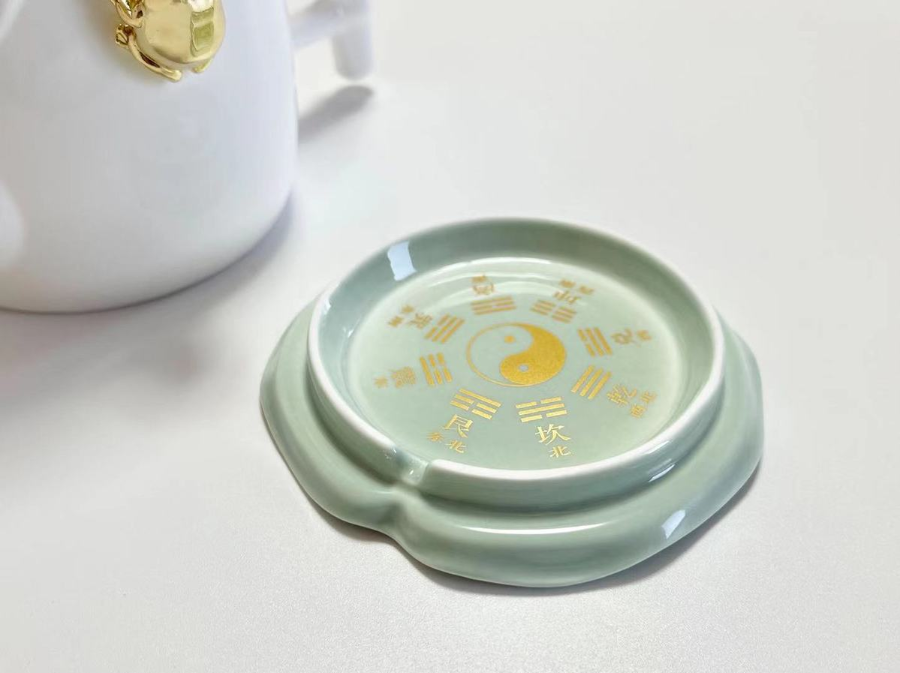
Bagua
Introduction to Bagua
Bagua, also known as the Eight Trigrams, represents one of the most fundamental concepts in Chinese philosophy and cosmology. It is a symbolic system used in Taoism, traditional Chinese medicine, and martial arts, illustrating the interconnections between cosmic forces, natural phenomena, and human life. Bagua consists of eight trigrams, each composed of three lines that can be either whole or broken, representing various natural elements and forces. The trigrams reflect different states and processes in the universe, serving as a framework for understanding complex interactions within various disciplines.
Origins and Philosophical Background
The concept of Bagua is deeply rooted in the I Ching, or the Book of Changes, which is one of the oldest Chinese classical texts. The I Ching uses a combination of 64 hexagrams, each comprising two trigrams, to provide insights into the dynamics of the universe and guide decision-making. The origins of Bagua are attributed to the legendary Chinese sage Fu Xi, who is said to have devised the trigrams after observing patterns in nature, such as the sky, rivers, and animal tracks. Each trigram symbolizes an aspect of natural phenomena, such as Heaven, Earth, Thunder, Water, Mountain, Wind, Fire, and Lake.
Bagua in Feng Shui and Architecture
Bagua plays a significant role in the practice of Feng Shui, a traditional Chinese art of arranging space to harmonize with the surrounding environment. In Feng Shui, the Bagua map is used as an energy template to analyze and enhance the flow of qi (life force) within a space. Each trigram corresponds to a compass direction and a particular energy type, which is applied to balance and optimize the energy flow in homes, offices, and public buildings.
Cultural Significance and Integration
Bagua is a pervasive element in Chinese cultural expressions, and it is often incorporated into various forms of art, literature, and folklore. It represents a profound philosophical understanding of the balance and cyclic nature of life, influencing Chinese thought and lifestyle for centuries. The symbol of Bagua is also prominently featured in numerous cultural artifacts, such as pottery, textiles, and traditional clothing, showcasing its significance in daily life and its role in conveying cultural identity.
Bagua in Martial Arts and Health
In martial arts, Bagua is integral to the development of internal strength and balance. Styles such as Baguazhang, or "eight-diagram palm", utilize the principles of Bagua to cultivate agility, fluidity, and strategic movement. Baguazhang emphasizes circular motion and continuous flow, reflecting the dynamic interplay of forces within the Bagua trigrams. Practitioners of Baguazhang aim to harmonize their internal energy with external actions, enhancing physical health and self-defense capabilities. Similarly, tai chi and other martial arts incorporate Bagua's principles to promote mental clarity, balance, and well-being.
Modern Interpretations and Global Influence
In contemporary contexts, the influence of Bagua extends beyond its traditional boundaries. It has inspired various creative and artistic endeavors, such as fashion, design, and even technology. The symbolism of Bagua resonates with global audiences, offering a universal language of balance and harmony that transcends cultural differences. The integration of Bagua into modern life reflects its adaptability and timeless relevance, as it continues to inspire and guide individuals in the pursuit of personal growth and understanding of the world. Photo Gallery(7 pictures)CategoriesChinese PhilosophyTagChinese Cultural SymbolRelatedThree Sovereigns and Five EmperorsAncient Building Complex in the Wudang MountainsChinese Kung FuXingyi BoxingCatalogue1. Introduction to Bagua2. Origins and Philosophical Background3. Bagua in Feng Shui and Architecture4. Cultural Significance and Integration5. Bagua in Martial Arts and Health6. Modern Interpretations and Global Influence- - - []








