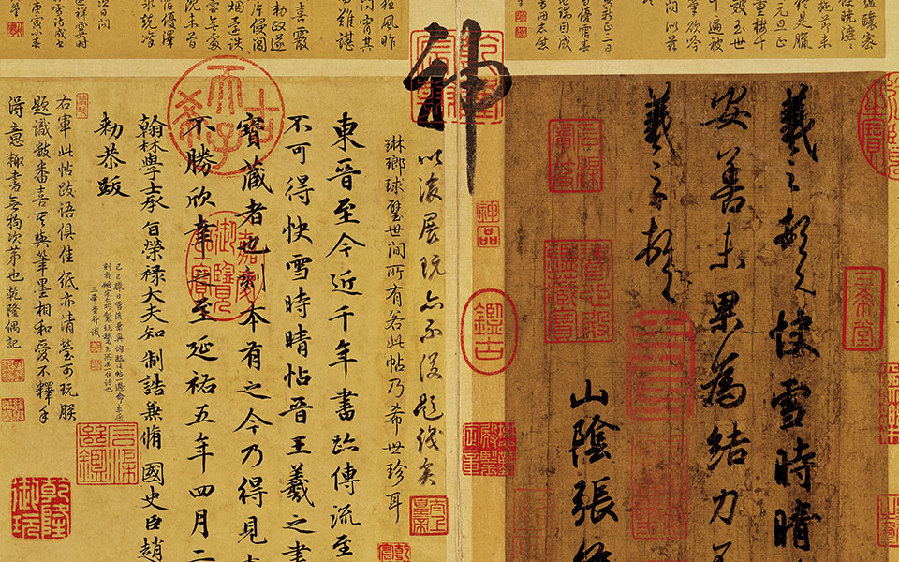
Calligraphy
Overview
Calligraphy, a revered form of art in Chinese culture, is an intricate practice that intertwines aesthetics and the written word. Unlike in Western traditions where writing primarily serves as a tool for communication, Chinese calligraphy elevates this function to an art form that combines literature, visual aesthetics, and emotion. The practice involves using a brush and ink on xuan paper, a process that demands precision, creativity, and technical skill. The aim is not merely to convey information but to create a visual representation of beauty that reflects the calligrapher’s thoughts and feelings.
Traditionally, calligraphy was a cornerstone of education and a marker of cultural status. From oracle bone inscriptions to the sophisticated scripts developed in later dynasties, calligraphy has continuously evolved, each style reflecting the cultural and historical context of its time. The five principal script styles—seal, official, cursive, running, and regular—each offer distinct characteristics and challenges, requiring varying levels of mastery and interpretation.
Historical Evolution
The history of Chinese calligraphy is deeply intertwined with the development of Chinese written language and culture. Its origins can be traced back to inscriptions on oracle bones from the Shang Dynasty (c. 16th century-11th century BC) in Anyang, Henan province. These primitive characters laid the foundation for future script evolution, transitioning through stone drum inscriptions, bronze inscriptions, and various seal script styles. By the time of the Eastern Jin Dynasty (317-420), calligraphy had emerged as a distinct art form with masterpieces like Wang Xizhi's "Lan Ting Xu" (The Orchid Pavilion Preface), which exemplifies elegance and expressiveness, earning a revered place in Chinese cultural history. The Tang Dynasty (618-907) marked another pinnacle for calligraphy, where it was both an art form and a demonstration of scholarly and bureaucratic competence. During this era, calligraphers such as Ouyang Xun, Yu Shinan, and Yan Zhenqing produced works that are still emulated today.
Calligraphy was not only a personal artistic practice but also a means of securing social and political standing. The imperial examination system further cemented the importance of calligraphy in societal structures as calligraphic skill often influenced the outcome of these exams. The Song Dynasty (960-1279) introduced significant changes with figures like Su Shi advocating for self-expression through calligraphy, breaking away from rigid traditional forms and infusing personal emotion and philosophical thought into the art. This period highlighted a shift towards individuality, allowing calligraphy to flourish as a medium of personal and artistic expression.
Importance in Chinese Culture
Calligraphy holds a place of profound importance in Chinese culture, serving as a medium through which intellectual and artistic heritage is both preserved and disseminated. It acts as a bridge connecting the past and present, embodying centuries of cultural evolution and philosophical thought. At its core, calligraphy is more than artistic handwriting; it is an expression of the calligrapher’s inner world, reflecting personal emotions, philosophical beliefs, and aesthetic preferences.
Historically, calligraphy was critical for education and social mobility. Mastery of the art was a prerequisite for scholars and officials aiming to ascend within the imperial bureaucracy. This cultural practice was a manifestation of one's refinement and intellect, often placing individuals in higher social strata. Beyond its functional role, calligraphy is deeply rooted in everyday life and spiritual practices. It is present in ceremonies, religious rituals, and various forms of decoration that adorn homes and public spaces.
Calligraphy is central to traditional Chinese celebrations, such as the Spring Festival, where couplets are hung to bring good fortune. In modern times, calligraphy continues to be a source of national pride, regarded as a living heritage that inspires contemporary art, architecture, and design. It remains a vital part of cultural education, taught in schools to instill appreciation for linguistic beauty and historical continuity.
Notable Calligraphers
Throughout Chinese history, many calligraphers have achieved legendary status, revered for their profound skill and innovation. Wang Xizhi, often referred to as the "Sage of Calligraphy," is one of the most celebrated figures, known for his exemplary work "Lan Ting Xu." His influence extends beyond his era, with subsequent generations striving to emulate his fluid yet disciplined style.
Another eminent name is Su Shi, also known as Su Dongpo, from the Song Dynasty. Su Shi's contributions to calligraphy were significant, particularly his advocacy for self-expression (yi) and innovation within the art. His semi-cursive script, typified by the masterpiece "Han Shi Tie," is celebrated for its emotional depth and dynamic form. Su Shi's approach was characterized by a departure from strict adherence to traditional forms, instead focusing on the expression of personal emotion and philosophical thought.
Calligraphers like Yan Zhenqing in the Tang Dynasty and Zhao Mengfu in the Yuan Dynasty further enriched the art form, each contributing unique stylistic elements and philosophies. Yan Zhenqing's works are known for their authoritative strength and structure, while Zhao Mengfu's style is celebrated for its clarity and elegance.
Modern Developments
In contemporary China, calligraphy is experiencing a renaissance, with increased interest and participation across various demographics. This resurgence can be attributed to the broader cultural renaissance and the desire to reconnect with traditional heritage in a rapidly modernizing society. Technological advancements have also played a role, facilitating the spread and accessibility of calligraphy through digital platforms and online tutorials.
Calligraphy is now integrated into school curricula, from primary education to higher learning institutions, ensuring that new generations appreciate and perpetuate this traditional art form. Additionally, the practice is promoted through community centers and cultural initiatives that encourage broader participation, including calligraphy competitions, workshops, and exhibitions.
The art form has also found new expressions in modern art, design, and architecture, influencing contemporary aesthetics and creative disciplines. Artists experiment with calligraphy in mixed media, installations, and digital formats, expanding its reach and relevance in global artistic dialogue. The modern approach to calligraphy not only preserves its historical value but also infuses it with fresh perspectives and innovative techniques, ensuring its continued vitality in a dynamic cultural landscape.
Calligraphy in Global Context
The global fascination with Chinese calligraphy has grown significantly, with international audiences and scholars recognizing its artistic and cultural significance. Exhibitions showcasing calligraphy often attract large crowds, offering a window into the richness of Chinese culture and the intricacies of its written language.
Calligraphy has become an important cultural export, with artists and educators hosting workshops, lectures, and demonstrations worldwide. This global engagement fosters cross-cultural appreciation and understanding, highlighting the universality of artistic expression through calligraphy. The art form's influence extends beyond the Chinese diaspora, impacting global art and design. Designers and artists incorporate calligraphic elements into fashion, advertising, and multimedia projects, demonstrating the versatility and aesthetic appeal of traditional Chinese script.
Furthermore, calligraphy serves as a bridge in academic and diplomatic exchanges, promoting cultural dialogue and collaboration. As a result, calligraphy is not confined to its cultural origins but is celebrated as a global artistic tradition, inspiring new generations of enthusiasts and practitioners across diverse cultural landscapes. Article reference1. Sharing the Beauty of China: Chinese Calligraphy. chinaservicesinfo.com. 20222. Chinese calligraphy. chinadaily.com.cn. 2020Photo Gallery(6 pictures)CategoriesArtsTagChinese Cultural SymbolChinese CalligraphyRelatedLuo GuanzhongSong BrocadeEight Great Prose Masters of the Tang and Song DynastiesChina's National Intangible Cultural HeritageCatalogue1. Overview2. Historical Evolution3. Importance in Chinese Culture4. Notable Calligraphers5. Modern Developments6. Calligraphy in Global Context- - - []








