Chiyou
Introduction
Chiyou is a prominent figure in Chinese mythology and history, widely regarded as a mythical warrior and an ancestral leader of the Miao ethnic group. Known as the leader of the ancient Jiuli tribe, Chiyou is celebrated for his strength and combat prowess. He is often depicted in legends as a formidable tribal chief who engaged in a famous battle against the Yellow Emperor, or Huangdi, and his ally the Red Emperor, or Yandi. Despite his ultimate defeat, Chiyou's legacy endures through various cultural expressions and traditions, particularly among the Miao people. Chiyou is revered not only as a legendary warrior but also as a cultural and spiritual icon, symbolizing the rich history and heritage of the Miao ethnic group.
Historical and Mythological Background
Chiyou's historical and mythological background is deeply rooted in ancient Chinese culture. He is often regarded as one of the three ancestors of the Chinese nation, alongside the Yellow Emperor and the Red Emperor. According to mythology, Chiyou was a powerful and skilled leader who commanded a tribe known as the Jiuli, noted for their advanced metalworking skills and fierce combat abilities. The most famous legend associated with Chiyou is the Battle of Zhuolu, where he faced the allied forces of the Yellow and Red Emperors. Despite his defeat, Chiyou's legacy as a warrior and a cultural hero has persisted, particularly among the Miao ethnic group, who regard him as their ancestor.
Chiyou's influence extends beyond mythology into the realm of history, where he is viewed as a symbol of resistance and strength. His defeat at the hands of the Yellow Emperor marked a pivotal moment in Chinese history, symbolizing the unification of various tribes under the leadership of the Yellow Emperor. This unification laid the foundation for the development of Chinese civilization. Chiyou's story has been passed down through generations, evolving from myth to a symbol of cultural identity for the Miao people.
Cultural Significance
Chiyou holds considerable cultural significance, especially within the Miao ethnic group. He is venerated as an ancestral figure and a symbol of ethnic pride and identity. The Jiyou Festival, celebrated annually by the Miao people, reflects this cultural reverence. The festival involves traditional sacrificial ceremonies and festivities that honor Chiyou's contributions as an ancestral leader and a cultural hero. In 2007, the Jiyou Festival was recognized on the intangible cultural heritage list of Guizhou province, highlighting its importance in preserving and promoting Miao cultural traditions.
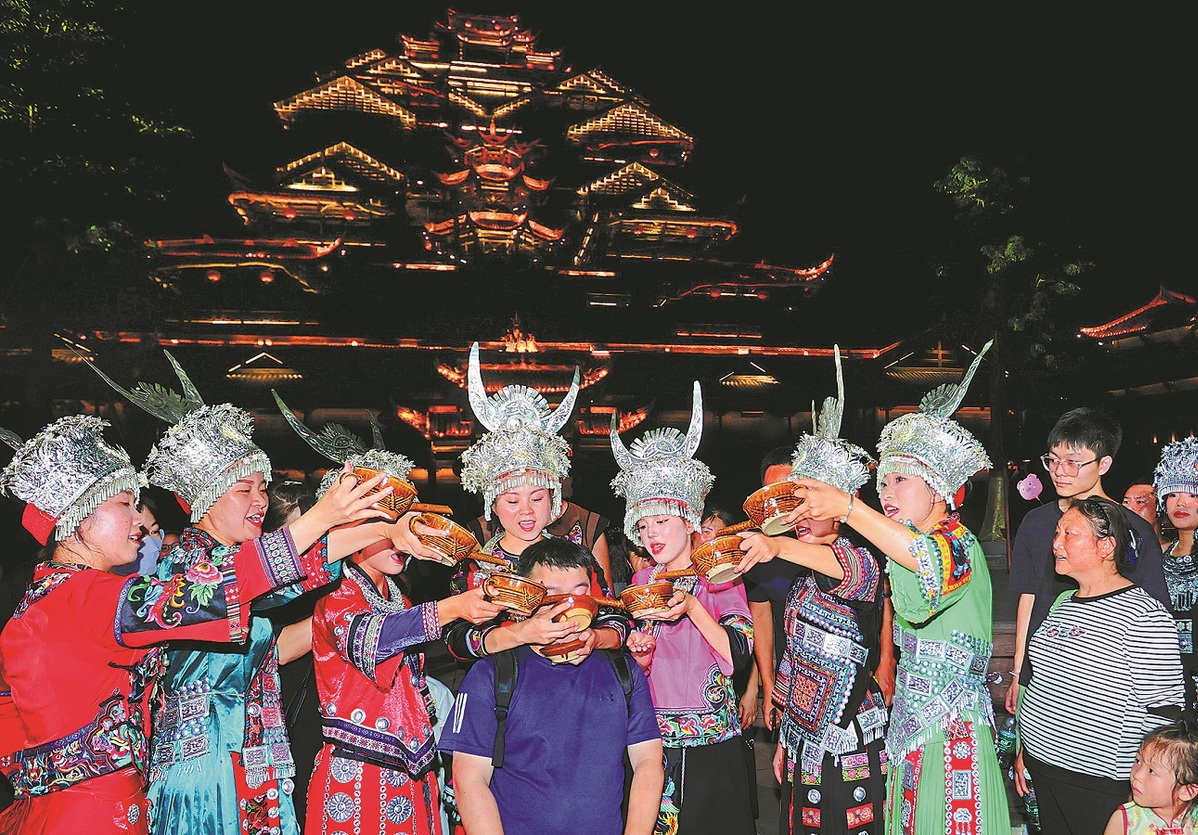
Chiyou's cultural impact extends beyond rituals and festivals. His legacy is also reflected in the architecture, art, and customs of the Miao people. The Chiyou Jiuli Town in Chongqing's Pengshui Miao and Tujia autonomous county is a testament to his enduring influence, incorporating the history and culture of the Miao ethnic group. Opened to the public in 2015, the town is named after Chiyou and the ancient Jiuli tribe, serving as a vibrant testament to the history and culture of the Miao ethnic group. Spanning over 28 hectares, Chiyou Jiuli Town features more than 40 traditional Miao-style buildings constructed on stilts, making it China's largest stilt building complex. The town hosts an annual Chiyou sacrificial ceremony, drawing visitors from across the world to participate in the cultural festivities. The centerpiece of Chiyou Jiuli Town is the impressive 24-meter-tall Jiuli Pillar, the tallest stone totem pole of the Miao ethnic group. Adorned with 108 carved figures, the pillar stands as a symbol of cultural pride and heritage. Through its architecture, festivals, and cultural activities, Chiyou Jiuli Town serves as a hub for preserving and promoting the rich traditions and history of the Miao people, while also attracting tourists and fostering a sense of ethnic identity and community.
Archaeological Findings
Archaeological discoveries have provided insights into the legendary figure of Chiyou and the broader context of ancient Chinese civilization. While much of Chiyou's story is rooted in mythology, certain archaeological findings have shed light on the historical backdrop of his era. For instance, excavations in various regions of China have uncovered artifacts and relics that corroborate aspects of the mythological narratives surrounding Chiyou and the tribes he led.
Among notable discoveries are ancient totem poles and ceremonial artifacts believed to be associated with the Jiuli tribe. These findings suggest the existence of a complex and advanced society during Chiyou's time, characterized by intricate craftsmanship and cultural practices. While definitive historical evidence of Chiyou's life remains elusive, these archaeological insights contribute to a deeper understanding of the cultural and historical milieu in which his legend originated.
Chiyou in Literature and Art
Chiyou's presence in literature and art is a testament to his enduring legacy in Chinese culture. He has been depicted in various forms of artistic expression, from historical texts and folklore to modern interpretations in comics and popular media. Chiyou's storied battles and legendary status as a warrior have made him a compelling figure in Chinese mythology, inspiring countless retellings and adaptations over the centuries.
In literature, Chiyou's narrative is often intertwined with themes of heroism, resistance, and cultural identity. His story serves as a source of inspiration for authors and artists seeking to explore the rich tapestry of Chinese mythology and history. In contemporary media, Chiyou has been reimagined in works such as the Marvel comic series "Warriors of Three Sovereigns," where he is portrayed as a formidable adversary in a modern context. These artistic interpretations reflect the ongoing fascination with Chiyou's mythos and his significance as a cultural icon.








