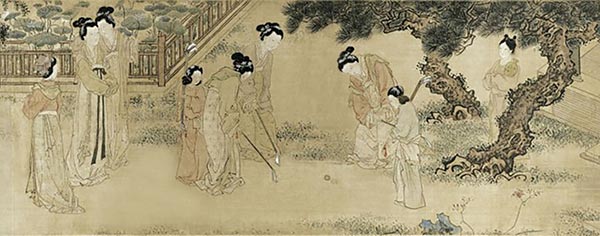
Chuiwan
Introduction
Chuiwan (捶丸) is an ancient Chinese game that holds significant historical relevance as a precursor to modern golf. The term "Chuiwan" is derived from two Chinese characters: "chui," which means to hit, and "wan," which means ball. This game was predominantly played during the Song Dynasty and remained popular until the Ming Dynasty. It involved players using a set of clubs to strike wooden balls towards designated targets marked by brightly colored flags. The game is known for its resemblance to modern-day golf, featuring elements such as specialized clubs for long distances, akin to the modern driver, and rules emphasizing etiquette and sportsmanship. Chuiwan is not only a testament to the rich cultural heritage of ancient China but also an intriguing link to the evolution of golf as we know it today.
History
Chuiwan's origins can be traced back to the Song dynasty when it gained popularity among the Chinese elite and was prominently featured in period paintings. The game continued to thrive through the Yuan Dynasty (1271–1368), during which the Wan Jing (丸经), or Classic of the Ball, was published. This book detailed the rules of Chuiwan and highlighted the importance of sportsmanship and correct behavior, underscoring the cultural emphasis on etiquette that parallels modern golf. The game was also celebrated in the Ming dynasty, with notable depictions such as Emperor Xuanzong playing on a course marked with flag sticks, reminiscent of a contemporary putting green. The decline of Chuiwan began during the Qing Dynasty (1644–1912), as the game gradually faded from Chinese culture.
Rules of the Game
The rules of Chuiwan were meticulously recorded in the Wan Jing, illustrating a structured approach to the game similar to modern golf. Players employed ten different clubs, each with a specific purpose, to navigate various distances and terrains on the course. The primary objective was to strike a wooden ball and direct it towards a target, typically marked by a colored flag. The game required players to dig holes in the ground, into which they aimed the ball using the clubs, mirroring the concept of putting in golf. The emphasis on proper conduct and sportsmanship was paramount, aligning with the values cherished in contemporary golf circles.
Equipment
The equipment used in Chuiwan bears a striking resemblance to modern golf gear. Players utilized a set of ten clubs, each designed for different functions, including a club for long-distance strikes similar to today's driver. The wooden balls used in Chuiwan were propelled towards targets, with their size and design playing a crucial role in the gameplay. The course was marked with brightly colored flags, serving as targets and enhancing the visual appeal of the game. The ji (基), or base, functioned as an early version of the tee, providing a stable platform from which players commenced their swings.
Cultural Significance
Chuiwan holds a prominent place in Chinese cultural heritage, reflecting the historical penchant for sports and entertainment among the elite. The game was not only a leisure activity but also a demonstration of skill and strategy, intertwined with cultural values such as sportsmanship and etiquette. Its depiction in imperial paintings and literature underscores its significance and popularity during the Song, Yuan, and Ming dynasties. Chuiwan, along with other ancient Chinese sports like archery and martial arts, contributes to the rich tapestry of China's historical sports culture, offering insights into the recreational practices of the past.
Influence on Modern Golf
The influence of Chuiwan on modern golf is a topic of considerable interest, given the similarities between the two games. Chuiwan's structured gameplay, use of clubs for varied distances, and emphasis on etiquette are echoed in golf's contemporary rules and practices. While golf as we know it today was formalized in Scotland during the 15th century, the documented evidence of Chuiwan suggests that a similar game was played in China centuries earlier. This historical connection highlights the potential impact of Chuiwan on the development of golf, contributing to the ongoing debate over the origins of this esteemed sport.
Decline and Legacy
Chuiwan's decline during the Qing dynasty marked the end of its widespread popularity in China. The reasons for its fading are not well documented, but the game eventually disappeared from the cultural landscape. Despite its decline, the legacy of Chuiwan endures, particularly through its contributions to the history of sports and its potential influence on modern golf. As a royal and ancient game, Chuiwan continues to captivate historians and sports enthusiasts alike, serving as a fascinating chapter in the narrative of global sporting traditions. Its story is a testament to the enduring appeal of sports that bridge cultures and transcend time.








