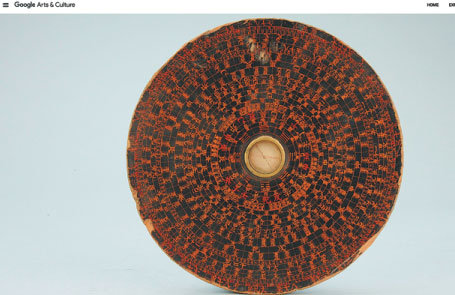
Compass
Introduction
The compass is an essential navigational instrument that utilizes the Earth's magnetic field to indicate the cardinal directions: North, South, East, and West. It plays a crucial role in navigation, allowing travelers and explorers to determine their direction relative to the Earth's poles. Compasses have been vital tools in the advancement of exploration, navigation, and cartography throughout history. The typical compass comprises a magnetized needle that aligns itself with the Earth's magnetic field, a dial with directional markings, and a housing to protect the components.
History
Ancient Origins
The invention of the compass is attributed to ancient China, where it was initially used for divination and geomancy during the Warring States period (475–221 BC). The earliest compass was made of lodestone, a naturally magnetized iron ore, which was later refined into a magnetized needle. By the 11th century, the Chinese utilized compasses for navigation at sea, significantly enhancing maritime exploration capabilities.
Development in Navigation
The compass spread to Europe by the 12th century, where it underwent further refinements. During the Age of Exploration in the 15th and 16th centuries, the compass became indispensable to explorers such as Christopher Columbus and Vasco da Gama. It facilitated long-distance sea voyages across uncharted waters, leading to the discovery of new lands and the expansion of global trade routes.
Modern Use
Today, the compass remains a fundamental instrument in various fields, including maritime and aviation navigation, surveying, and recreational activities like hiking and orienteering. While modern technology has introduced advanced navigational tools like GPS, the compass remains a reliable and widely used backup device.
Types of Compasses
Magnetic Compass
The magnetic compass is the most traditional type, featuring a magnetized needle that aligns with the Earth's magnetic field. It is simple, reliable, and widely used for basic navigation.
Gyroscopic Compass
The gyroscopic compass is used primarily in maritime and aviation applications. It employs a gyroscope to maintain a fixed orientation, unaffected by the Earth's magnetism. This type is advantageous for its stability and accuracy, especially over long distances.
Electronic Compass
The electronic compass, also known as a digital compass, uses electronic sensors to detect the Earth's magnetic field. It provides digital readouts and is often incorporated into modern devices, such as smartphones and GPS systems, enhancing accuracy and ease of use.
Components
Needle
The needle is a magnetized metal, typically made of steel, that aligns with the Earth's magnetic field to indicate direction. It is often mounted on a pivot, allowing it to rotate freely and point toward magnetic north.
Dial
The dial, or compass card, is marked with the cardinal directions and degrees for precise navigation. It provides a reference for interpreting the needle's position and determining the user's heading.
Housing
The housing, or compass case, protects the compass's internal components and often features a transparent cover to view the dial and needle. It may also include additional features, such as a sighting mirror or clinometer for advanced navigation tasks.
Uses
Navigation
Compasses are essential tools for navigation, enabling users to determine their direction and course. They are used in various modes of transport, including ships, aircraft, and vehicles, as well as by hikers and explorers.
Surveying
In surveying, compasses assist in measuring and plotting land boundaries and features. They provide direction and angle measurements critical for creating accurate maps and plans.
Education
Compasses are used in educational settings to teach geography, navigation, and earth sciences. They help students understand magnetic fields, cardinal directions, and the principles of orientation and exploration.
Technological Advancements
Technological advancements have significantly enhanced compass functionality. Modern compasses often integrate with electronic devices, providing digital interfaces, enhanced accuracy, and additional data like altitude and location coordinates. These innovations have expanded the compass's applications beyond traditional navigation.
Cultural Impact
The compass has had a profound impact on culture and exploration, symbolizing human curiosity and the quest for discovery. It has played a pivotal role in historical events such as the Age of Exploration and the development of global trade networks. Its influence extends into literature, art, and symbolism, representing guidance, direction, and adventure.








