Cross-Stitching
Introduction
Cross-stitching is an ancient form of embroidery that has been practiced for centuries across different cultures. It involves creating stitches in the shape of an "X" on fabric, following a pre-drawn pattern. The craft is seen as both an art form and a traditional skill passed down through generations. Over time, cross-stitching has been used not only for decorative purposes but also as a means of preserving cultural heritage.
Historical Background
Cross-stitching has a rich history that dates back to ancient times. In many cultures, it was an essential skill for creating clothing and other household items before the industrialization of textile production. In particular, the Wangjiang needle art from Wangjiang county in Anhui province, China, is notable for its double-sided cross-stitching technique. This method, which originated during the Tang Dynasty (618-907), creates patterns that appear identical on both sides of the fabric. The designs are typically in blue and white, reflecting the craft's simplicity and unique aesthetic value.
Significance in Cultural Heritage
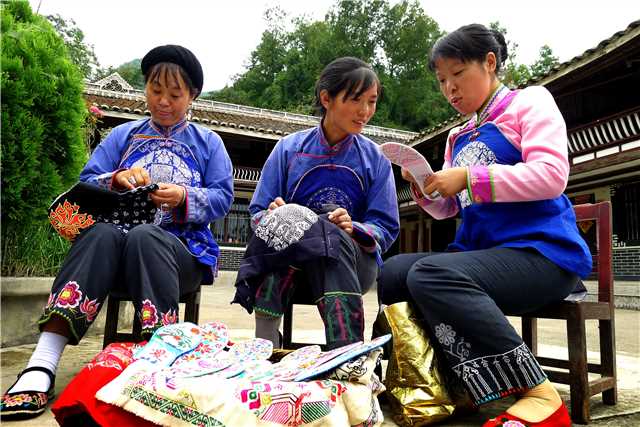
Cross-stitching plays a crucial role in cultural preservation and identity. In regions like Hunan province in China, the Huayao people, a subgroup of the Yao ethnic group, have used cross-stitching as a vital part of their cultural expression. This craft has been instrumental in recording the history and traditions of the Huayao people, who live in remote mountain settlements without a written language. Each piece of cross-stitching embodies the maker's understanding and reflections on life, serving as a cultural narrative for the community.
In Sichuan province, Maliu embroidery, which includes cross-stitching known locally as Jiahua, is a widespread tradition that has been preserved as a national intangible cultural heritage. Maliu embroidery is renowned for its vibrant use of colors and motifs, often depicting Chinese zodiac signs and symbolic animals like the lion, which represents happiness and protection. Despite challenges in preserving this art form, efforts have been made to integrate it into local education and promote it among younger generations.
Economic and Social Impact
The economic impact of cross-stitching has been significant, particularly in rural and impoverished areas. In Hunan province, cross-stitching has become a source of income and empowerment for Huayao women. Initiatives led by institutions like Hunan University have helped transform cross-stitching into a viable economic activity by promoting cultural and creative products, enhancing local tourism, and providing training and resources to artisans. Similarly, in Maliu township, the craft has been incorporated into local schools and skill development programs, boosting its popularity and providing new opportunities for the community.
Modern Adaptations and Challenges
As traditional cross-stitching faces the challenges of modernization, many artisans and cultural activists strive to adapt and innovate within the craft. In Guizhou province, Wang Jing, an inheritor of Bouyei ethnic clothing traditions, has modernized cross-stitching by integrating contemporary design elements while maintaining the traditional essence. This approach has not only kept the craft relevant but has also expanded its appeal to younger audiences and international markets.
One of the significant challenges remains the declining interest among younger generations, who are increasingly drawn to urban lifestyles and fashions. Efforts such as the development of educational apps and board games aim to engage children and spark an interest in traditional crafts, ensuring that these skills are passed down to future generations.
Conclusion
Cross-stitching is more than just a needlework technique; it is a representation of cultural identity, history, and artistry. Its preservation is vital for maintaining the cultural fabric of many communities, while its adaptation ensures its relevance in a modern context. Through education, innovation, and community involvement, cross-stitching continues to thrive, offering both economic benefits and cultural enrichment. As societies evolve, so too must the traditions that define them, and cross-stitching stands as a testament to the enduring power of cultural heritage and creativity.








