Dashilan
Overview
Dashilan, also locally pronounced as dashila'er, is one of the most historically rich and culturally vibrant commercial hutongs in Beijing, China. Situated near Qianmen Street, part of the Central Axis of Beijing, Dashilan has been a focal point of commerce and tradition for centuries. This area has evolved over time, maintaining its cultural heritage while integrating elements of modernity. Dashilan offers an intriguing juxtaposition of traditional Chinese culture and contemporary artistic expressions, making it a unique destination in the capital.
Historical Significance
Tracing its origins back to the Yuan Dynasty (1271-1368), Dashilan is one of the oldest commercial streets in Beijing. The name Dashilan, which translates to "big fence," is believed to have originated from the wooden fences constructed during the Ming Dynasty (1368-1644) for trade and safety purposes. Though these fences have long since disappeared, the name has persisted through the centuries. Historically, Dashilan has been a bustling hub of trade and entertainment, hosting theaters, bathhouses, and restaurants, especially during the Qing Dynasty (1644-1911).
Cultural and Commercial Landmarks
Dashilan is home to numerous time-honored brands and historic establishments, each contributing to its cultural tapestry. Notable stores include Ma Ju Yuan, renowned for its hats, Nei Lian Sheng, famous for its traditional footwear, and Rui Fu Xiang, celebrated for its silk products. The presence of herbal medicine shops, tea houses, and pickle stores further enriches the area's cultural offerings.
Additionally, Dashilan boasts the Da Guan Lou cinema, recognized as the oldest cinema in China. Founded in 1905 by Ren Qingtai, a pioneer in Chinese cinema, it continues to operate today, preserving its historical legacy.
Artistic Influence and Modern Development
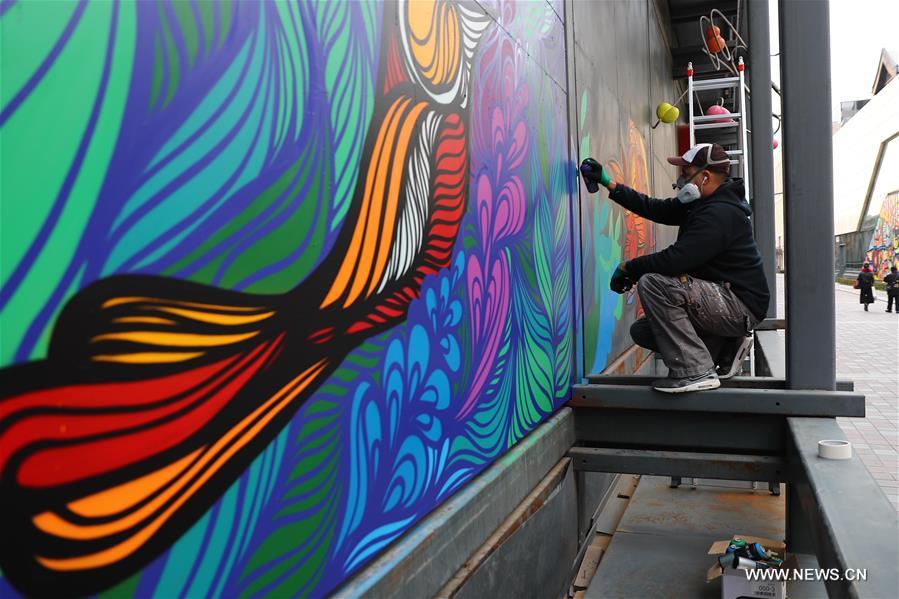
In recent years, Dashilan has emerged as a canvas for artistic expression, attracting artists from around the globe. An example of this is the collaborative graffiti art created by Hip Hop artists from China and France during the "Paris Hip Hop" cultural festival in Beijing. This event highlighted the area's role as a bridge between traditional and modern art forms.
Moreover, the ongoing development and renovation efforts have transformed Dashilan into a cultural and business innovation hub. Initiatives to integrate artistic shops, cafes, and bars have redefined the area, offering visitors both historical insights and contemporary experiences.
Photography and Cultural Preservation
Dashilan and its surrounding hutongs have been the subject of extensive photographic documentation, capturing the essence of daily life in these traditional alleys. Jia Yong, a Beijing-native photographer, has dedicated his life to documenting the dynamic life within these hutongs since 1984. His work provides a valuable visual record of the area's cultural evolution and the lifestyles of its residents, underscoring the importance of preserving these living histories.
Dashilan as a Cultural Hub
Beyond its historical and commercial significance, Dashilan serves as a cultural nexus within Beijing. It hosts various cultural exhibitions and events that celebrate traditional Chinese wisdom and creativity. The integration of advanced technology and traditional cultural elements in exhibitions, such as those held in nearby innovation parks, exemplifies Dashilan's role in promoting cultural dialogue and artistic exploration.
In summary, Dashilan is not merely a historical street; it is a living testament to Beijing's enduring cultural heritage and its ongoing journey of transformation and adaptation. From its ancient roots to its present-day vibrancy, Dashilan continues to be a symbol of the rich tapestry of Beijing's urban life. Article reference1. A hutong brimming with history. chinadaily.com.cn. 20232. Photographer captures city's hutong history. chinadaily.com.cn. 20213. Chinese, French artists create graffiti artworks in Beijing. chinadaily.com.cn. 2017Photo Gallery(14 pictures)CategoriesTourismTagHistorical BuildingCity TourismRelatedYangmeizhu West StreetHutongCatalogue1. Overview2. Historical Significance3. Cultural and Commercial Landmarks4. Artistic Influence and Modern Development5. Photography and Cultural Preservation6. Dashilan as a Cultural Hub- - - []








