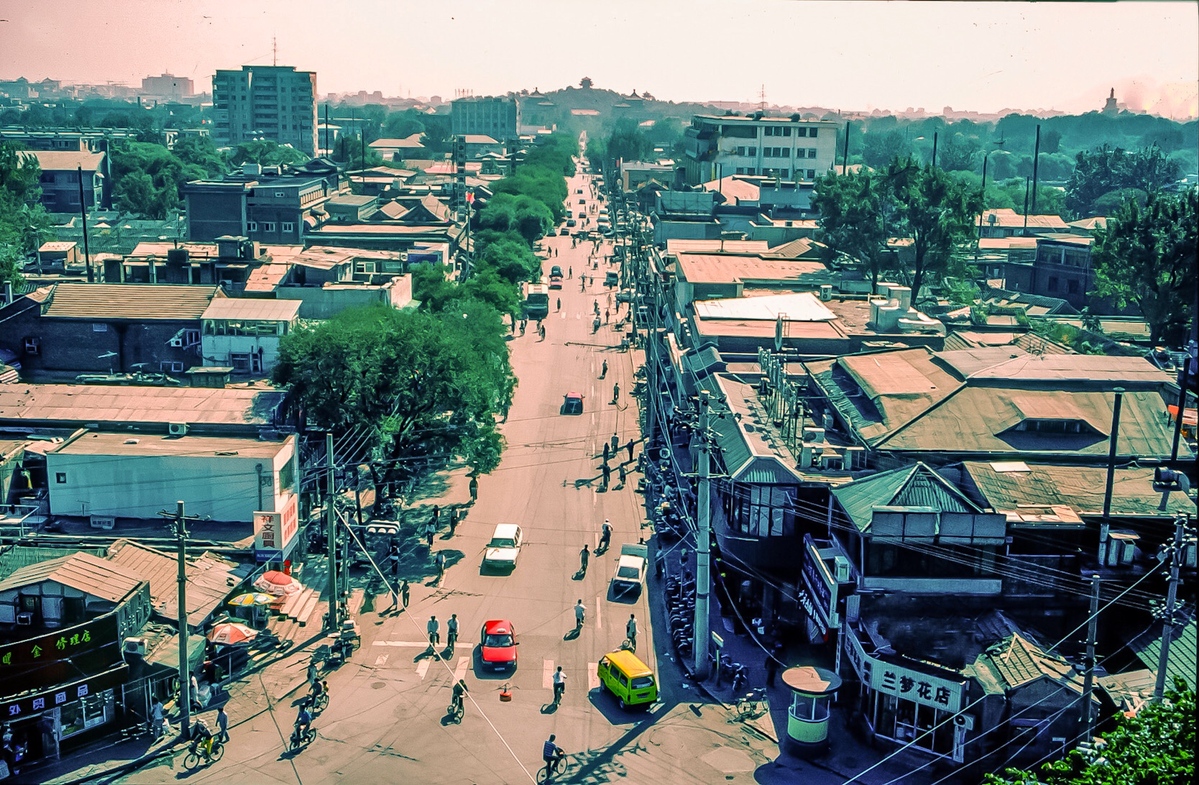
Di'anmen
Overview
Di'anmen, translated as "Gate of Earthly Peace", was a significant gate in Beijing's historical city wall system, forming part of the city's central axis. Constructed during the Ming Dynasty (1368–1644), it was one of the "Nine Outer Gates" that guarded the Imperial City. Located between the Drum Tower and Jingshan Park, Di'anmen historically connected the Inner City and key ceremonial and administrative areas of Beijing.
Historical Significance
Di'anmen was built as part of Beijing's city fortifications under the Ming Dynasty and continued to hold prominence during the Qing Dynasty (1644–1912). It served both as a strategic checkpoint and a cultural landmark. The name "Gate of Earthly Peace" reflects traditional Chinese cosmological beliefs, contrasting with "Tian'anmen", or "Gate of Heavenly Peace", located to the south of the Forbidden City.
The gate was a bustling hub in Beijing's urban life, surrounded by markets, residences, and important cultural institutions. It also marked the northern end of the Imperial Way, the ceremonial route that extended southward through the Forbidden City.
Architecture
The gate was designed in the traditional Chinese architectural style, with an imposing arched base and a multi-storied wooden superstructure. Its design mirrored the grandeur and symmetry central to Beijing's city planning, emphasizing the capital's status as the heart of imperial China.
Article reference1. Axis is central to capital's appeal. chinadaily.com.cn. 2024Photo Gallery(1 picture)CategoriesCultural HeritageTagHistorical BuildingCity TourismRelatedNanluogu XiangCatalogue1. Overview2. Historical Significance3. Architecture-
- []








