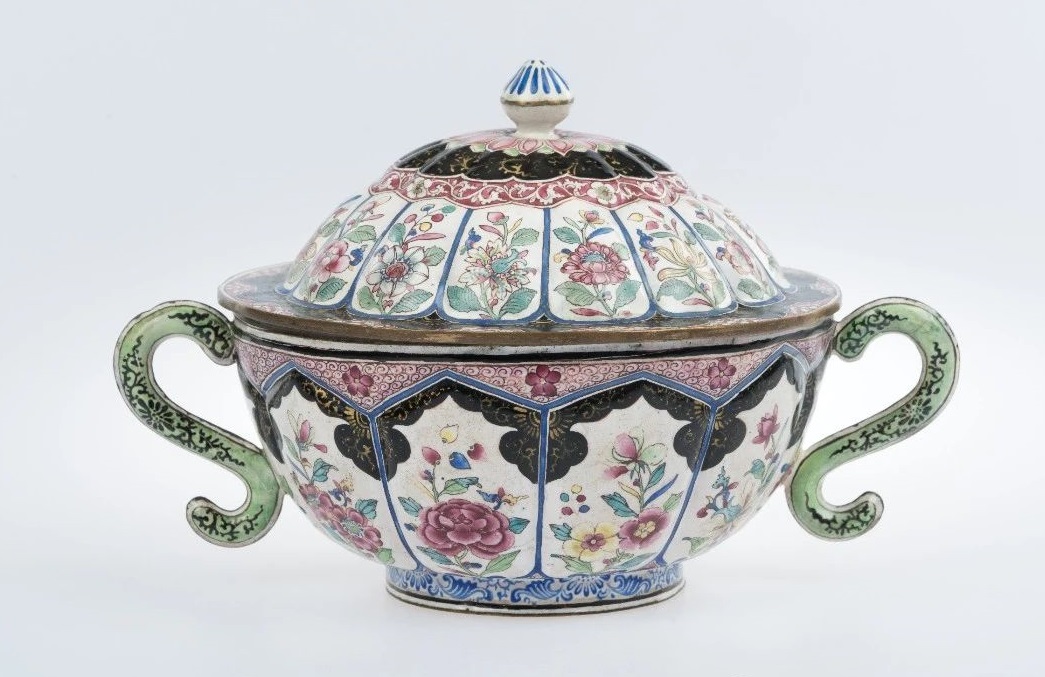
Enamel
Introduction
Enamel, also referred to as vitreous enamel, represents a decorative art and protective finish dating back to ancient times. It involves the fusing of powdered glass to a substrate through firing at high temperatures. Various uses, from jewelry to kitchenware, highlight enamel's versatility and aesthetic appeal. Its rich history spans multiple cultures across centuries, with significant developments in techniques and styles.
Historical Background
The origin of enamel can be traced back to ancient civilizations, including the Mycenaeans who, around the 13th century BC, inlaid enamel into gold rings. The technique spread to other cultures, gaining prominence during the Byzantine Empire. In China, enameling was introduced in the late 13th century, with cloisonné becoming the predominant style. This was particularly favored during the Ming Dynasty (1368-1644), notably under the Jingtai reign, hence the colloquial term Jingtai Lan (Jingtai blue).
Development in China
Enamel's introduction to China marked the beginning of its integration into Chinese art, particularly cloisonné. This involved the meticulous creation of designs on metal surfaces using colored glass pastes. The technique gained immense popularity, influencing both imperial and folk art throughout the Ming and Qing (1644-1911) dynasties.
Cloisonné, or Jingtai Lan, saw its aesthetic and technical zenith during the Ming Dynasty. The vibrant indigo blue of cloisonné, coupled with the intricate designs and patterns, was emblematic of Chinese artistry. During the Qing Dynasty, the art of cloisonné further evolved, incorporating influences from European enameling techniques, especially during the reigns of emperors like Kangxi, Yongzheng, and Qianlong.
The 20th century saw a decline in traditional enamelware production, largely due to industrialization and changing tastes. However, the craft experienced a resurgence thanks to enthusiasts who valued its historical and cultural significance.
Global Influences and Techniques
The global journey of enamel has seen a rich exchange of techniques and styles. Cloisonné enameling, rooted in Chinese tradition, incorporates influences from both the Arab and Byzantine empires. The intricate process involves creating small compartments on a metal base using thin metal strips, which are then filled with ground glass and fired to create a smooth, durable finish.
European enameling techniques, such as those developed during the Renaissance, introduced painted enamel and plique-à-jour, expanding the palette and application of enamel in art. The introduction of these techniques to China in the late 17th century, particularly during the Qing Dynasty, led to innovations like painted enamel and the development of famille rose porcelain, which blended traditional Chinese artistry with European influences.
Cultural Exchange
Enamel art serves as a testament to the rich cultural exchanges between East and West. The Cantonese enamel that emerged in Guangzhou during the late 17th century epitomizes this cross-cultural fusion, combining Chinese and Western design elements. These pieces reflect the historical interactions facilitated by trade and diplomacy, particularly during the Qing Dynasty when the imperial court began to embrace Western artistic influences. In modern times, enamel art continues to evolve, embracing both traditional and contemporary techniques.








