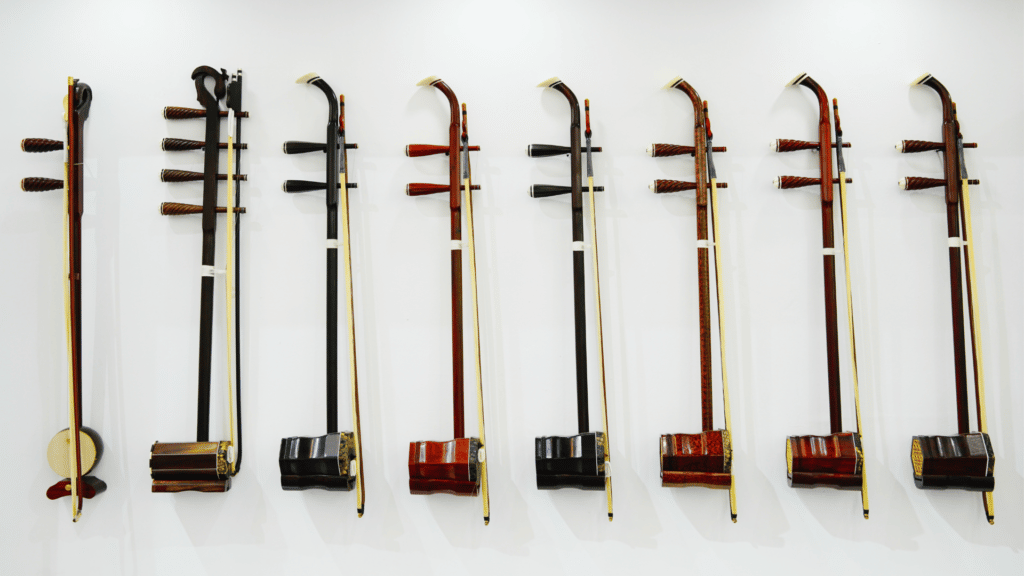
Erhu
Introduction
The erhu, often referred to as the "Chinese violin," is a two-stringed bowed instrument with a deeply resonant and expressive sound. This traditional Chinese musical instrument has a rich history spanning over a thousand years, originating during the Tang Dynasty (618-907 AD). Known for its ability to convey a wide range of emotions, the erhu has become a staple in Chinese folk and classical music.
Historical Background
The erhu's historical roots are traced back to the Tang Dynasty, where it was initially referred to as the "jiqin." Over the centuries, the instrument evolved both in construction and musical significance, becoming prominent in Chinese music. Erhu's name comprises "er," meaning "two," indicating its two strings, and "hu," which historically referred to non-Han Chinese people, suggesting its origins beyond the Han core areas, likely from regions such as Mongolia.
The erhu gained prominence in northern China during the early 20th century, primarily due to the efforts of Liu Tianhua (1895–1932), a musician and composer who revolutionized the instrument by introducing it to Beijing. Liu's contributions helped the erhu gain popularity, and it became an integral part of Chinese musical ensembles, notably in Peking opera and various folk music genres.
Design and Construction
The erhu is characterized by its long neck, two tuning pegs at the top, and a resonating sound box at the bottom, typically covered with snakeskin. The body of the erhu is traditionally crafted from hardwoods such as redwood, rosewood, or black sandalwood, contributing to its distinctive tone. The bow is made of horsehair, traditionally sourced from Mongolian horses due to the thickness and strength of the hair in cold climates.
The use of snakeskin on the soundbox is crucial for the erhu's sound quality. Skilled artisans prefer thick, tight snakeskin from wild snakes, as it produces a superior tone compared to synthetic alternatives. The scales should be neither too small nor too large, and the quality of the erhu is often judged by the craftsmanship involved in this aspect.
Playing Technique
Playing the erhu requires a unique technique involving the use of both hands to create sound. The player typically sits with the soundbox resting on their left thigh and the neck held vertically. The bow is positioned between the two strings, and subtle movements of the left hand control the pitch and vibrato, while the right hand maneuvers the bow to produce sound. This setup allows the erhu to imitate the human voice, giving it the ability to express deep emotional nuances.
Cultural Significance
In Chinese culture, the erhu is renowned for its melancholic and expressive sound, often evoking themes of nature, love, and longing. Some of the most famous pieces played on the erhu, such as Moon Reflected in the Second Spring by Hua Yanjun (also known as A Bing) and Horse Racing, are celebrated for their emotive qualities. Hua Yanjun, a blind musician from Wuxi, is particularly noted for his contributions to erhu music and is revered for his expressive compositions that capture the spirit of Jiangnan culture.
Erhu in Modern Times
Today, the erhu continues to be a vital part of Chinese music, both in traditional settings and contemporary adaptations. It is prominently featured in performances by the China National Opera and Dance Drama Theater, where players introduce the instrument to international audiences, fostering cultural exchange. The instrument's versatility has also led to its inclusion in various musical genres, ranging from classical to modern pop, showcasing its adaptability and expanding its global appeal.
In cities like Wuxi, known as the "Land of the Erhu," the instrument is not only culturally significant but also an economic staple, with local workshops producing tens of thousands of erhus annually. Renowned erhu makers, such as those in Meicun town, continue to uphold traditional crafting techniques while innovating to meet contemporary demands.








