Gaoqiao
高跷
- 分类: 艺术瑰宝
- ID: 1867523215722332161
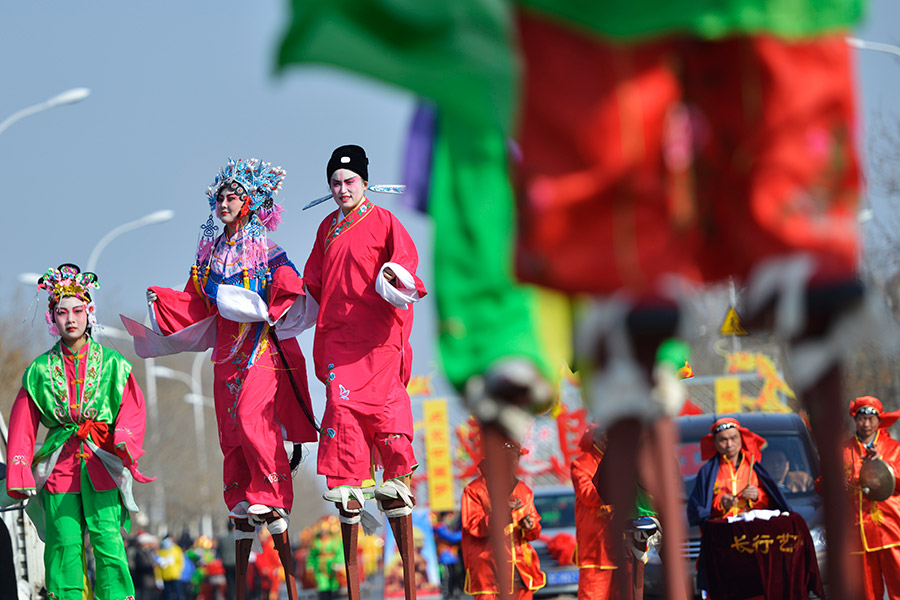
Home CategoryArtsGaoqiaoPlay4 minsGaoqiao, or Gaoqiao Yangge (Stilt Yangge) is a traditional folk dance widely performed across China, characterized by dancers walking on stilts while executing lively and elaborate movements.ShareCatalogue1. History2. Features3. Cultural Significance4. PreservationGaoqiao, or Gaoqiao Yangge (Gaoqiao) is a traditional folk dance widely performed across China, characterized by dancers walking on stilts while executing lively and elaborate movements.
The dance is often performed in groups, with participants using wooden stilts of varying heights, ranging from 30 cm to over 300 cm. The name "Gaoqiao" is derived from the combination of Gaoqiao meaning "stilts" and Yangge, a type of folk dance known for its energetic and rhythmic movements.
History
The origins of Gaoqiao date back to ancient China, where stilts were initially used for practical purposes such as helping people gather fruit from tall trees. Over time, this utilitarian tool evolved into a form of performance art. The earliest depictions of stilt walking can be traced to the Northern Wei Dynasty (AD 386-534), with stone carvings depicting stilt walkers performing in festivals and rituals.
Features
Gaoqiao is typically performed in a team, with the number of performers ranging from a few to several dozen. The dancers often portray characters from historical stories or ancient myths, wearing elaborate costumes that are similar to those worn in traditional Chinese opera.
Common props used in performances include fans, handkerchiefs, wooden sticks and mock weapons such as knives and spears. The dance usually features two main forms: Cai Jie (street parade) and Liao Chang (performance with varying formations). The former involves a procession through the streets, while the latter includes formations and patterns that can range from simple to complex.
The performance is divided into two major styles: Wenqiao (civil) and Wuqiao (martial). Wenqiao emphasizes graceful, intricate footwork and narrative storytelling, while Wuqiao focuses on acrobatic skills and martial arts movements, often showcasing feats of balance, agility, and strength.
Cultural Significance
Gaoqiao holds great cultural significance in China, particularly during festivals such as the Spring Festival, where it is performed to celebrate the New Year and bring good fortune. The dance is considered a symbol of auspiciousness and vitality.
Historically, it was believed that stilt walkers could drive away evil spirits and bring blessings for a good harvest or favorable weather. Regional variations, such as Beasts on Gaoqiao in Shanxi and Haicheng Gaoqiao in Liaoning, have become distinct forms of the dance, often incorporating local customs, folklore and traditional music. These performances are not only a form of entertainment but also serve as prayers for prosperity and health.
Preservation
Recognized for its rich cultural heritage, Gaoqiao was included in China's first list of Intangible Cultural Heritage in 2006. Efforts to preserve the art form have included formal recognition, documentation and performance in cultural festivals.
In regions like Shanxi, Liaoning and Gansu, local versions of Gaoqiao have been preserved for generations, maintaining the traditional customs while also adapting to modern tastes. Educational programs, community performances, and cultural exhibitions have helped to keep this ancient art alive, ensuring its continued relevance in Chinese cultural life.
Despite its deep roots in history, Gaoqiao continues to evolve, embracing new artistic expressions while retaining its traditional charm. The dance's preservation is vital in maintaining China's diverse cultural landscape and fostering a sense of identity and community through performance. Article reference1. Walking on Stilts (ICH). chinadaily.com.cn. 20132. Nanzhang county set to showcase stilt culture with high-speed rail link. chinadaily.com.cn. 20193. Lantern Festival celebrations kick off in Guangping county. chinadaily.com.cn. 2023Photo Gallery(5 pictures)CategoriesArtsTagChinese DanceIntangible Cultural HeritageCatalogue1. History2. Features3. Cultural Significance4. Preservation- - - []








