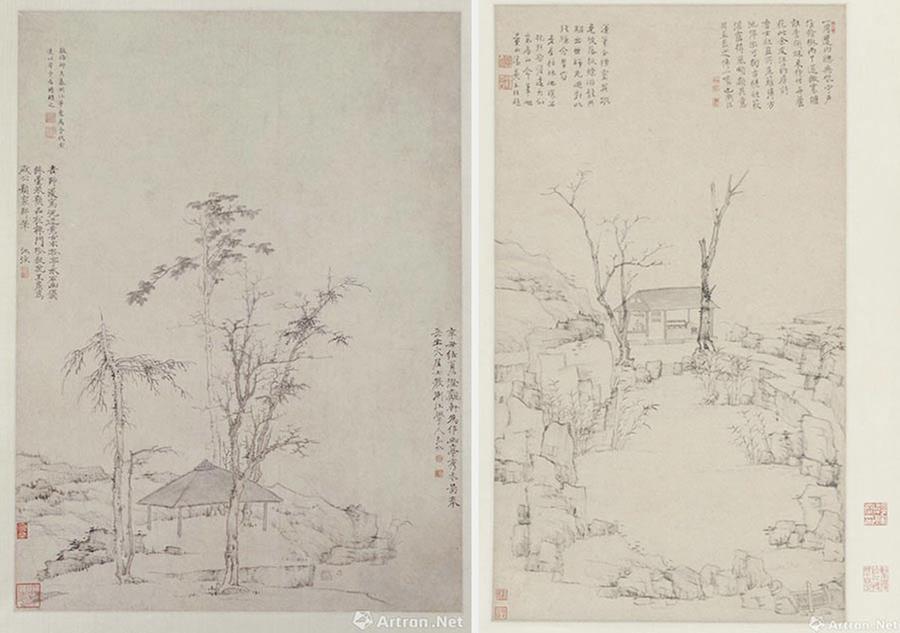
Hongren
Introduction
Hongren, also known as Hong Ren, is a celebrated figure in Chinese art history, particularly renowned for his contributions as a painter during the early Qing Dynasty period. Hongren is recognized as one of the Four Monks, a group of Buddhist monk-artists who were pivotal in the realm of Chinese fine art. His work is emblematic of the tranquil and introspective qualities associated with Chan Buddhism, which is reflected in the serene and meditative nature of his paintings. Hongren's artistry is characterized by simplicity and tranquility, a reflection of his life as a monk and his philosophical views. His artworks continue to be celebrated for their artistic depth and are frequently showcased in prominent exhibitions, such as the one held at the Hall of Martial Valor in Beijing's Palace Museum.
Historical Background
The early Qing Dynasty was a period of significant cultural and artistic development in China. During this time, many artists, including Buddhist monks like Hongren, embraced painting as a means of personal expression and spiritual contemplation. The transition from the Ming (1368-1644) to the Qing Dynasty was marked by upheaval and change, and artists of this era often grappled with themes of loyalty and transformation in their works. Hongren, along with his contemporaries Kuncan, Bada Shanren, and Shitao, became known as the Four Monks, each contributing uniquely to the development of Chinese painting with their distinct styles. Despite the political and social tumult of the period, the Four Monks remained loyal to the aesthetics and values of the preceding Ming Dynasty, infusing their artworks with philosophical and meditative themes that resonated with Chan Buddhist principles.
Artistic Style
Hongren's artistic style is noted for its minimalist approach and contemplative essence, often featuring landscapes that exude a sense of calm and introspection. His paintings typically utilize delicate brushwork and subtle ink washes to convey the vastness and tranquility of nature. Unlike some of his contemporaries, Hongren's compositions are marked by an intentional simplicity, allowing viewers to experience the serenity and spiritual depth inherent in his work. This approach reflects his Chan Buddhist beliefs, where simplicity and an appreciation for the natural world are central themes. Hongren's art stands as a testament to his ability to merge his spiritual life with his artistic practice, resulting in works that are not only aesthetically pleasing but also philosophically profound.
Major Works
Among Hongren's notable works are his landscape paintings, which often depict serene mountain vistas and tranquil natural settings. While specific titles of his paintings may not be widely known, the themes and style of his work have left a lasting impact on the tradition of Chinese landscape painting. His ability to convey the essence of nature with minimalistic brushstrokes and subdued color palettes has been celebrated as a hallmark of his artistic genius. These works continue to be studied and admired for their innovative blend of simplicity and emotional depth, encapsulating the spirit of introspection and tranquility that defines Hongren's legacy as an artist.
Influence and Legacy
Hongren's influence extends far beyond his own time, as his work continues to inspire modern artists and collectors. His contribution to the genre of Chinese landscape painting, particularly through the use of sparse compositions and a focus on capturing the spiritual essence of nature, has left an indelible mark on the art world. The Four Monks as a collective have significantly shaped the evolution of Chinese art, with Hongren's unique perspective adding a nuanced depth to their collective legacy. His paintings are not only valued as artistic masterpieces but are also seen as philosophical explorations of Chan Buddhism, offering insight into the meditative practices and spiritual reflections of his era.
References in Modern Culture
Hongren's artistic legacy extends into modern culture, where his work continues to be referenced and celebrated. His influence can be seen in contemporary art practices that draw upon traditional Chinese themes and aesthetics, as well as in the broader cultural appreciation for Chan-inspired art. Modern artists and scholars frequently study Hongren's techniques and philosophical approach, aiming to understand and replicate the spiritual depth and simplicity that define his paintings. His contributions to the art world remain a source of inspiration, demonstrating the enduring impact of his work on both historical and modern artistic landscapes.








