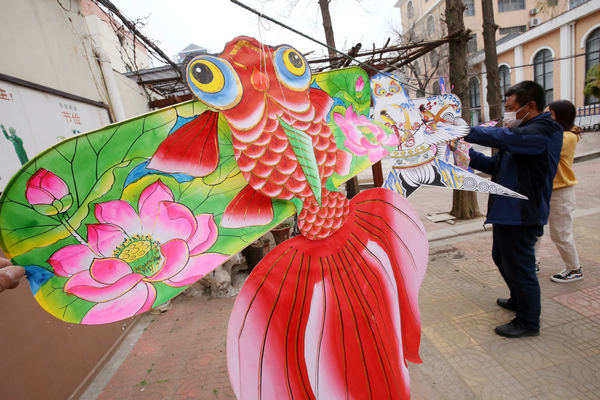
Kite-making
Overview
Kite-making is a traditional craft that has been practiced for over two thousand years, originating in China during the Spring and Autumn Period (770-476 BC). Known initially as the "wooden bird," kites are deeply embedded in Chinese culture, reflecting the artistry and innovation of ancient Chinese craftsmen. Over centuries, the craft of kite-making has evolved, incorporating traditional aesthetics with modern innovations, and it continues to be a significant cultural heritage element celebrated across the world.
Historical Background
Kite-making's roots trace back to the Spring and Autumn Period in China. Initially constructed from wood, early kites were simplistic but gradually developed more intricate designs and uses. By the Song Dynasty (960-1279), kites became popular as a form of outdoor entertainment, and they were primarily constructed from bamboo and silk or paper, materials that allowed for more elaborate designs and improved flight capabilities. The traditional shayan (swallow) kite kite-making craft originated from skills practiced by Cao Xueqin during the Qing Dynasty (1644-1911). Cao, better known as the author of the Chinese literary classic A Dream of Red Mansions, has designed various styles of swallow-shaped kites with patterns, colors and the symmetrical structure reflecting Chinese people's traditional aesthetic preferences.
Cultural Significance
Kites are not only a tool for leisure but also carry significant cultural symbolism. In traditional Chinese culture, flying kites is associated with letting go of bad luck and misfortune, a belief that persists today. Various kite designs, often depicting birds such as swallows and eagles, embody specific meanings; for instance, swallows symbolize the connection between the north and the south in China. This cultural aspect has been sustained through festivals like the Weifang International Kite Festival, which showcases kites in various forms, from traditional to contemporary designs reflecting myths, legends, and modern pop culture.
Regional Variations
Kite-making techniques and styles vary significantly across different regions in China, with distinct characteristics emerging from places like Weifang in Shandong province, Nantong in Jiangsu province, and Lhasa in Xizang autonomous region.
-
Weifang is renowned as the "World Kite Capital," hosting a diverse array of kites that depict local myths, legends, and cultural motifs. The annual Weifang International Kite Festival attracts participants worldwide, emphasizing innovation and creativity in kite-making.
-
Nantong kites, known for their rectangular shapes and melodic whistles, employ geometric designs associated with traditional Chinese cosmology and feng shui elements. The banyao kite, a notable style from Nantong, is famed for its whistling sound and has been recognized as a national intangible cultural heritage item.
-
Lhasa kites, known for their aerodynamic prowess, are used in aerial competitions and are a popular cultural export to neighboring countries like Nepal and Bhutan. These kites often feature vibrant designs and are celebrated for their agility and craftsmanship.
Modern Developments
Today, kite-making has embraced modern technology and artistic expression. Artisans like Zhang Tianwei in Xi'an have pioneered dynamic kites using mechanical transmission, creating kites that can move in the air like animated creatures. This innovation has expanded the scope of kite-making, blending traditional craftsmanship with new materials and techniques to create visually stunning and mechanically complex kites.
The recognition of kite-making as an intangible cultural heritage in China has also spurred efforts to preserve and promote the craft. Artisans and cultural institutions are actively engaged in passing down kite-making skills to younger generations, ensuring that this time-honored tradition continues to thrive.
Educational and Cultural Exchange
Kite-making continues to serve as a cultural bridge, fostering international understanding and appreciation. Workshops and educational programs, such as those held by Song Changhong in Henan and Yang Liping in Beijing, are crucial in passing on traditional kite-making techniques to new generations. These initiatives not only preserve the craft but also adapt it to contemporary contexts, ensuring its relevance and appeal.
The craft of kite-making is a testament to human creativity and cultural resilience, representing a vibrant tradition that has transcended its origins to become a global cultural phenomenon. Article reference1. 'Kite capital' flies high on modernization and heritage. chinadaily.com.cn. 20242. Art in the sky: Kites first took off in China over two millennia ago. chinadaily.com.cn. 20233. Exquisite banyao kites enchant at cultural exchange activity. en.nantong.gov.cn. 20214. Art and science, up in the air. chinadaily.com.cn. 2018Photo Gallery(27 pictures)CategoriesCultural HeritageTagIntangible Cultural HeritageRelatedChina's National Intangible Cultural HeritageSpring EquinoxWeifang International Kite FestivalKite FlyingCatalogue1. Overview2. Historical Background3. Cultural Significance4. Regional Variations5. Modern Developments6. Educational and Cultural Exchange- - - []








