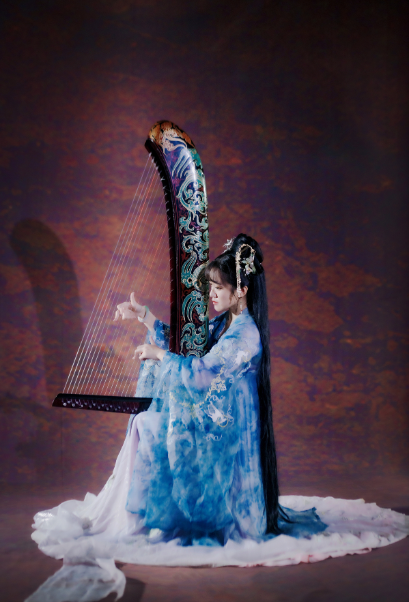
Konghou
Introduction
The konghou is an ancient Chinese stringed instrument known for its enchanting, harp-like shape and melodious tones. As a plucked instrument, it holds a significant place in Chinese musical history. The konghou's resurgence in modern times highlights the ongoing commitment to preserving and celebrating traditional Chinese culture. Its ethereal sound has been likened to heavenly music, capturing the imagination of musicians and listeners alike. Over the centuries, the konghou has been featured in numerous poems, murals, and performances, solidifying its place in the cultural tapestry of China.
History
The konghou's origins trace back over 2,000 years, making it one of the oldest musical instruments in China. It was first introduced to the Chinese hinterland through the Silk Road during the Han Dynasty (206 BC - AD 220). Its popularity peaked during the Tang Dynasty (618-907), a period renowned for cultural and artistic flourishing. The konghou was widely depicted in Tang Dynasty poems and murals, reflecting its prominence in court music and public performances.
Design and Structure
Types of Konghou
There are three primary types of konghou: the vertical konghou, the horizontal konghou, and the phoenix-headed konghou. Each type has distinct features that cater to different musical styles and performances. The vertical konghou is akin to a traditional harp, while the horizontal version resembles a zither. The phoenix-headed konghou, named for its ornate headpiece, combines aspects of both types, offering a unique aesthetic and sound.
Construction and Materials
The construction of a konghou involves meticulous craftsmanship, utilizing materials such as wood, bamboo, and silk strings. The sound box of the konghou is similar to that of a pipa, another traditional Chinese instrument, with strings stretched over a series of bridges. Typically, a konghou has between 36 to 44 strings, allowing for a wide range of musical expression. The instrument's design is both functional and artistic, with intricate carvings and decorations that reflect cultural motifs.
Playing Techniques
Traditional Techniques
Konghou playing techniques involve a combination of pressing, kneading, and sliding movements, producing a rich tapestry of sounds. These techniques require precision and skill, allowing performers to convey deep emotion and intricate musical narratives. Traditional compositions often integrate these techniques to showcase the konghou's unique capabilities, blending melody and rhythm seamlessly.
Modern Innovations
In recent years, modern innovations have expanded the konghou's repertoire, incorporating elements from both Eastern and Western musical traditions. Musicians have experimented with blending traditional techniques with contemporary styles, creating a fusion that appeals to a broader audience. The use of technology has also facilitated the konghou's adaptation to modern performance settings, enhancing its versatility and appeal.








