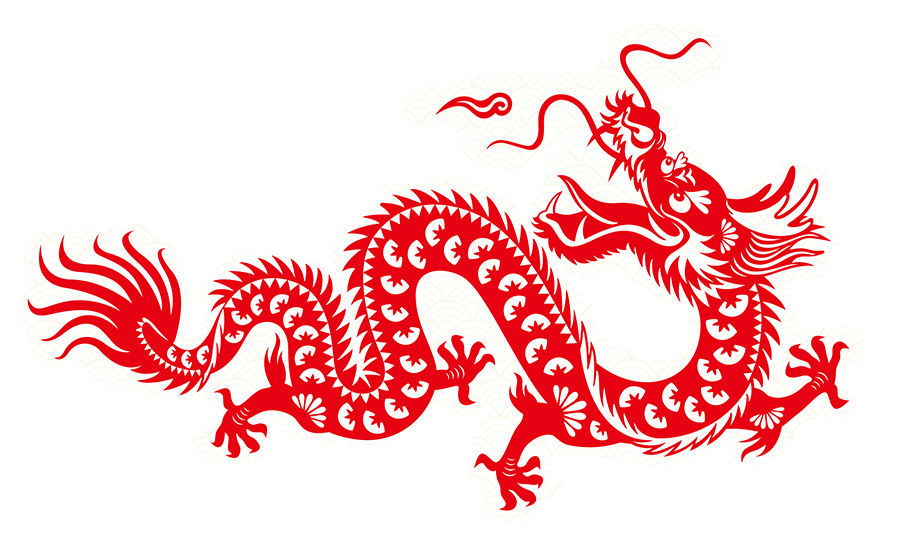
Loong
Introduction
The "loong", commonly referred to as the Chinese dragon, is a legendary creature deeply embedded in Chinese culture, mythology, and folklore. Unlike its Western counterpart, which is often portrayed as a malevolent and destructive force, the loong symbolizes power, excellence, good fortune, and harmony in Chinese traditions. It is revered as a national totem and is often associated with natural phenomena such as rain, storms, and water, reflecting its role as a bringer of life and prosperity. The loong has been a central motif in Chinese civilization for thousands of years, influencing art, literature, festivals, and cultural practices. Its enduring significance continues to captivate people worldwide, making it a symbol of Chinese heritage and cultural pride.
Etymology
The term "loong" is the Chinese pronunciation of the character 龙, which translates to "dragon" in English. The character has undergone significant evolution over the centuries, with its earliest forms appearing in oracle bone inscriptions, known as jiaguwen, during ancient Chinese civilization. These early depictions of the loong were hieroglyphic in nature, representing the creature's dynamic and mythical qualities. Over time, the character transformed through various calligraphic styles, including zhuanshu (seal script), lishu (clerical script), and kaishu (standard script), reflecting the aesthetic and linguistic development of Chinese writing. The loong's etymology not only highlights its linguistic journey but also underscores its cultural and symbolic importance as a representation of Chinese identity and tradition.
Historical Background
Origins and Early Depictions
The origins of the loong can be traced back to ancient Chinese mythology and folklore, where it was revered as a divine creature with control over water and weather. Early depictions of the loong appeared in oracle bone inscriptions, dating back over 3,000 years. These inscriptions, the earliest form of Chinese writing, often portrayed the loong with a serpentine body, horns, and other animalistic features, symbolizing its composite nature. According to legend, the loong is a fusion of various animals, including the eyes of rabbits, the antlers of deer, and the body of snakes, among others. This amalgamation reflects the inclusiveness and creativity of Chinese culture, as the loong embodies the harmonious coexistence of diverse elements.
Evolution Through Dynasties
Throughout Chinese history, the loong evolved in both form and meaning. During the Zhou Dynasty (c.11th century-256 BC), it became a symbol of imperial authority and divine power, often associated with the emperor, who was considered the "Son of Heaven." In the Han Dynasty (206 BC-AD 220), the loong's image became more standardized, appearing on artifacts such as jade carvings, bronze ware, and pottery. By the Tang and Song dynasties (618-1279), the loong had become a prominent motif in art and literature, symbolizing prosperity and cultural sophistication. During the Ming and Qing dynasties (1368-1911), the loong was intricately depicted in imperial robes, architecture, and ceremonial objects, further cementing its status as a symbol of power and auspiciousness. This historical evolution highlights the loong's enduring significance in Chinese civilization.
Cultural Significance
Symbolism in Chinese Culture
The loong holds profound symbolic meaning in Chinese culture, representing power, strength, and good fortune. It is often associated with natural elements such as water and rain, which are vital for agriculture and life. As a result, the loong is seen as a guardian of balance and harmony in the natural world. Chinese people often refer to themselves as "descendants of the loong," emphasizing the creature's role as a national totem and a unifying symbol of cultural identity. The loong also embodies qualities such as resilience, dynamism, and vitality, making it a source of inspiration and pride for generations.
Role in Festivals and Traditions
The loong plays a central role in various Chinese festivals and traditions. During the Chinese New Year, dragon dances are performed to bring good luck and drive away evil spirits. These performances feature elaborate dragon costumes manipulated by teams of dancers, showcasing the loong's dynamic and majestic nature. The loong is also celebrated in the Dragon Boat Festival, where dragon-shaped boats race in honor of the legendary poet Qu Yuan. Additionally, the loong is a common motif in traditional crafts such as sugar paintings, embroidery, and paper-cutting, reflecting its pervasive influence in Chinese cultural practices. These traditions not only celebrate the loong's symbolic significance but also preserve its legacy in modern times.
Representation in Art and Literature
The loong has been a prominent subject in Chinese art and literature for centuries. In visual art, it is depicted in various forms, from intricate jade carvings and bronze sculptures to vibrant paintings and embroidery. These artistic representations often highlight the loong's serpentine body, glittering scales, and other mythical features, capturing its dynamic and awe-inspiring essence. In literature, the loong appears in classical texts, poetry, and folklore, symbolizing themes of power, wisdom, and harmony. For example, the loong is featured in the "Classic of Mountains and Seas," an ancient Chinese text that describes mythical creatures and landscapes. Its enduring presence in art and literature underscores its cultural and aesthetic significance.
Modern Interpretations
In contemporary times, the loong continues to inspire creativity and innovation. For instance, a record-breaking 41.77-meter balloon loong was created in Hong Kong, showcasing the loong's adaptability to modern artistic expressions. Similarly, museums in China have developed cultural products such as plush toys and souvenirs inspired by the loong, appealing to younger generations and promoting cultural heritage. The loong has also gained international recognition, with artists and designers incorporating its imagery into global exhibitions and competitions. These modern interpretations not only celebrate the loong's historical and cultural legacy but also ensure its relevance in a rapidly changing world.








