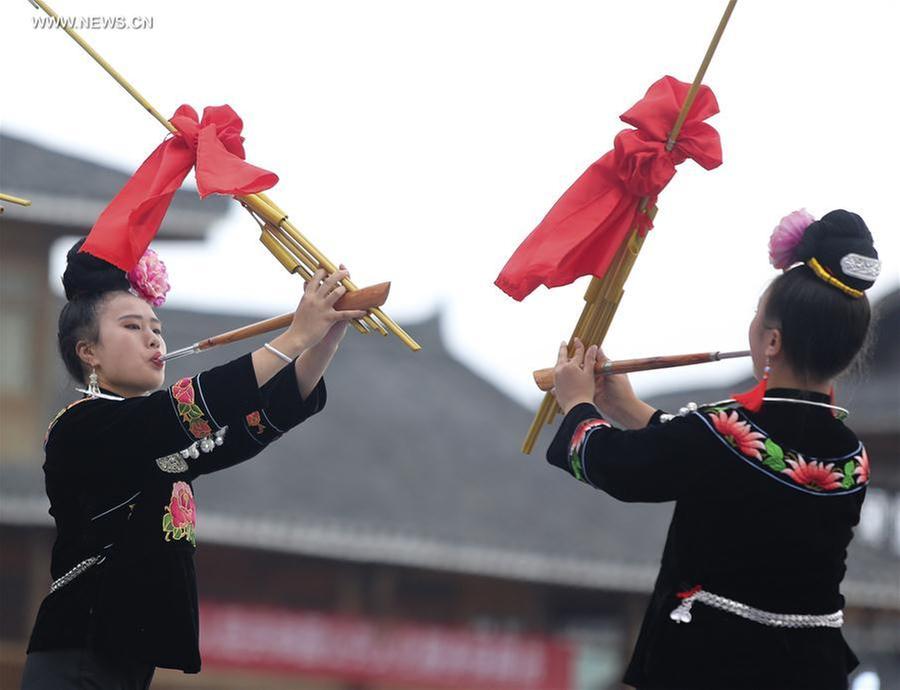
Lusheng
Introduction
The Lusheng is a traditional reed-pipe wind instrument primarily played by the Miao and Dong ethnic groups in China. This unique musical instrument is integral to the cultural and social life of these ethnic groups, often seen at festivals, celebrations, and communal gatherings. The Lusheng, with its harmonious and melodious sound, is not just an instrument; it embodies the cultural ethos and traditions of the communities that cherish it. The instrument is characterized by its distinct construction, typically having a series of bamboo pipes of varying lengths, which are harmonically tuned to produce a polyphonic sound. The Lusheng plays a pivotal role in the preservation and promotion of traditional Miao and Dong music, and its significance extends beyond mere entertainment, encompassing cultural identity and heritage.
History
The history of the Lusheng is deeply intertwined with the cultural practices of the Miao and Dong peoples. Its origins can be traced back several centuries, with ancient references suggesting its use in both ceremonial and festive contexts. The Lusheng has been a staple in the musical traditions of these ethnic groups, evolving in design and playing technique over the generations. Over time, the Lusheng's presence expanded beyond ethnic boundaries, gaining recognition in broader Chinese cultural festivals.
Construction and Design
Materials Used
The Lusheng is traditionally constructed using bamboo, wood, and metal. Bamboo is the primary material for the pipes, owing to its natural resonance and flexibility, which is crucial for sound production. The pipes are carefully selected and crafted, each tuned to produce a specific note that contributes to the instrument's harmonious output. The main body, often made of hardwood, serves as the resonator. Metal components, typically brass or copper, are used for the reed mechanism, critical for sound initiation. The precise selection and combination of these materials ensure the Lusheng's unique sound quality, allowing it to produce a rich, polyphonic texture.
Types and Variations
The Lusheng comes in various types and sizes, each with distinct characteristics. The number of pipes can range from two to more than a dozen, influencing the tonal range and complexity of the instrument. Smaller Lushengs, often used for solo performances, produce higher pitches and are more portable. In contrast, larger versions, which can be several meters long, are employed in group performances, capable of producing deeper, resonant tones. Variations exist not only in size but also in regional design differences, reflecting the diverse cultural expressions within Miao and Dong communities. Each variation contributes to the richness of the Lusheng tradition, allowing for a wide array of musical expressions and performances.
Performance Techniques
Playing the Lusheng requires a combination of skill and technique. Musicians must master the art of breath control and finger coordination to produce the desired notes and harmonies. The instrument is played by blowing into the main pipe and manipulating the finger holes on the bamboo pipes to change pitches. Skilled players can create intricate melodies and rhythms, often improvising to match the mood and theme of the performance. Group performances involve synchronization and harmony, reflecting the collective spirit and cultural unity of the performers.








