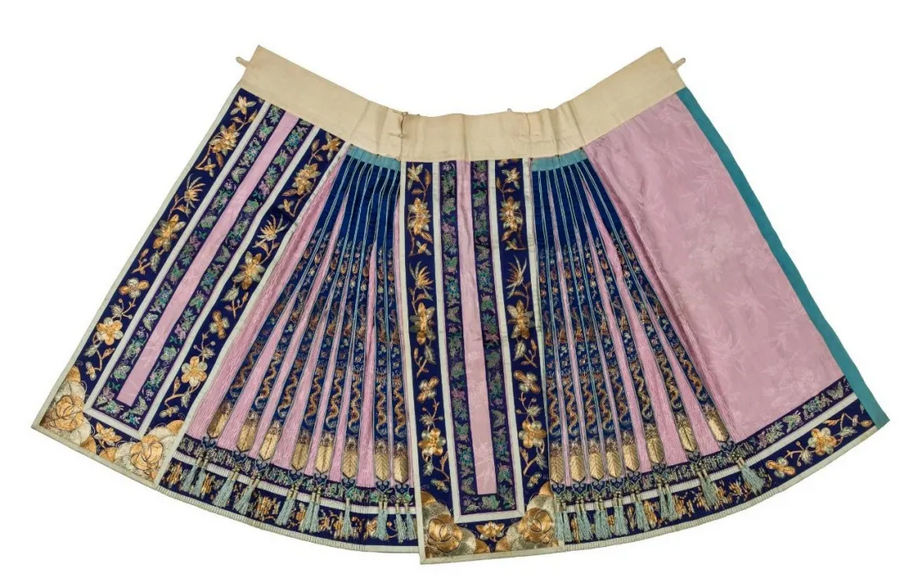
Mamianqun
Introduction
The Mamianqun, often translated as "horse-face skirt," is a distinctive traditional Chinese skirt currently experiencing a significant revival in contemporary fashion. The name derives not from an animal, but rather from a resemblance to the mamian, the fortified tower-like platforms projecting from ancient Chinese city walls. These rectangular structures share a visual similarity with the skirt's defining feature: a flat front panel flanked by pleated sides. While considered a key element of Hanfu, its contemporary appeal extends far beyond historical reenactment, solidifying the Mamianqun as a symbol of cultural pride and fashionable innovation.
History
The Mamianqun's history dates back to the Song Dynasty (960-1279) where it may have originated as a functional xuanqun (a style of skirt), designed to facilitate horseback riding. The style gained prominence during the Ming Dynasty (1368-1644) and remained popular throughout the Qing Dynasty (1644-1911). By the early 20th century, traditional clothing, including Mamianqun, experienced a decline due to the growing influence of Western fashion and modernization efforts in China. Historically, it was a versatile garment worn by both men and women, though it gradually became more closely associated with women's attire. Like many traditional garments, its popularity declined in the 20th century with the increased adoption of Western clothing. However, recent decades have witnessed a strong resurgence, fueled by a renewed interest in traditional Chinese culture and design.
Design and Structure
The Mamianqun is characterized by its unique construction, typically composed of two overlapping layers of fabric. This creates a distinctive flat front panel (qunmen) on each layer, while the sides are finely pleated. When worn, the front panels overlap, subtly revealing the pleated sides with each step, offering both modesty and freedom of movement.
Fabric and Materials: Traditionally, Mamianqun were crafted from luxurious materials like silk and brocade, as well as more practical materials such as cotton. These materials were valued for their durability, elegance, and suitability for intricate embroidery. Modern versions continue to utilize these traditional fabrics, while also incorporating lighter materials like chiffon and organza for everyday wear. Innovations such as elastic Song brocade have also been introduced to enhance wrinkle resistance and comfort.
Patterns and Embellishments: Traditional patterns frequently incorporate motifs drawn from Chinese art and culture, such as flora, fauna, and landscapes. Elaborate embroidery is a hallmark, adding texture and visual richness. Contemporary designs often creatively blend these traditional elements with modern aesthetics, featuring patterns inspired by diverse themes like blue-and-white porcelain, herbal medicines, and even fireworks.
Cultural Significance and Modern Revival
The Mamianqun transcends its function as a garment; it is a cultural artifact embodying traditional Chinese aesthetics and values. Historically, it served as a medium of self-expression and a marker of the wearer's social standing. Its historical significance fosters a strong sense of cultural pride, particularly among younger generations eager to reconnect with their heritage. The resurgence of the Mamianqun is a central tenet of the broader Hanfu revival movement. Its popularity has skyrocketed on e-commerce platforms, and modern adaptations, such as shorter hemlines and midi-length skirts, have rendered it suitable for contemporary daily wear. This revival has also generated a tangible economic impact, stimulating growth in traditional garment industries. For example, areas like Caoxian county in Shandong province have emerged as hubs for Hanfu production, creating numerous jobs and contributing to rural revitalization. The Mamianqun, therefore, stands as a compelling symbol of cultural confidence, seamlessly bridging tradition and modernity.








