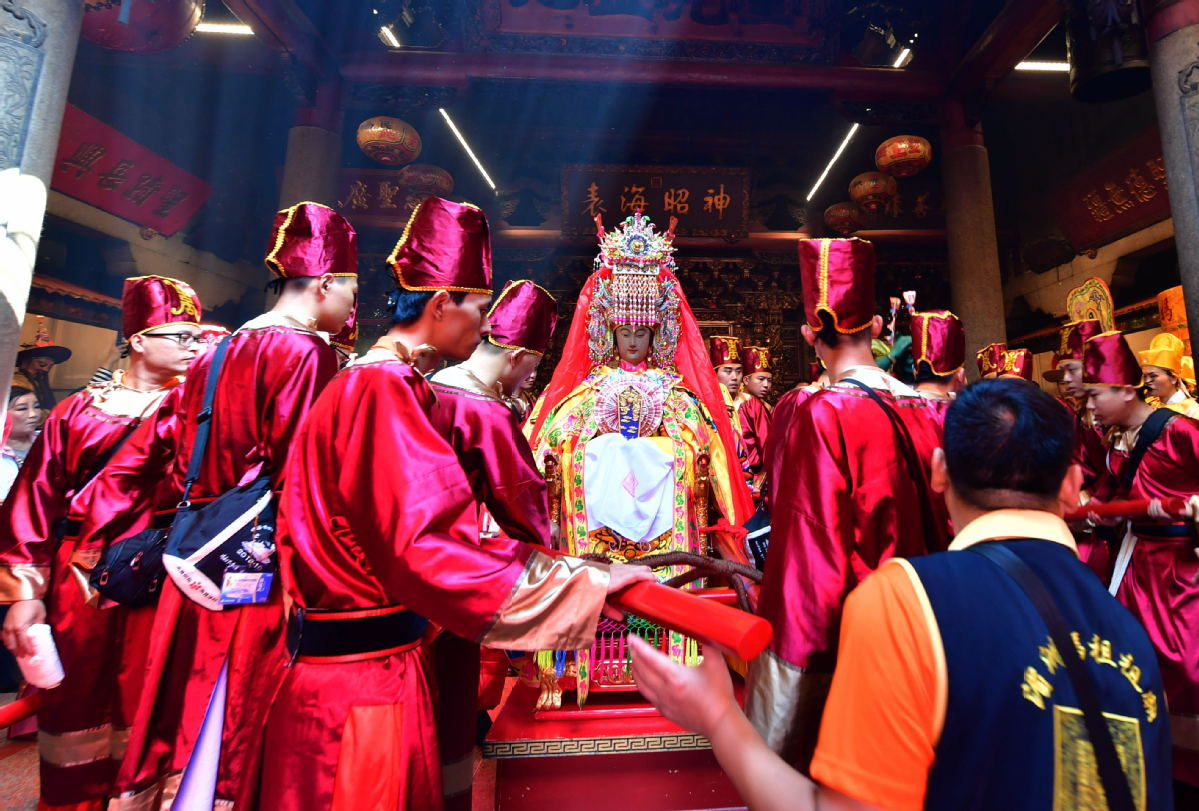
Mazu
Introduction
Mazu is one of the most revered deities in Chinese culture, known as the goddess of the sea. She is deeply embedded in the beliefs and customs of coastal China, where she is worshiped as a protector of sailors and fishermen. Her cult has spread to various countries with significant Chinese communities, including China's Taiwan region and other parts of Southeast Asia.
Historical Background
Mazu is believed to have been born as Lin Mo on Meizhou Island during the Song Dynasty (960–1279). Legend suggests she possessed supernatural abilities that allowed her to predict and control the weather, which she used to protect seafarers. Her death is shrouded in myth, often depicted as a sacrifice made while attempting to save others from a shipwreck. Following her death, the local community deified her as Mazu, building temples in her honor and celebrating her life through stories and festivals.
Cultural Significance
Mazu's influence extends beyond maritime safety. She is celebrated for her virtues of kindness, bravery, and altruism. Her image is a cultural touchstone for Chinese communities, providing a sense of spiritual unity and cultural identity. Mazu's veneration underscores the traditional values of family harmony and social concord. Her worship involves a variety of ceremonies and festivals, including temple fairs and processions that feature performances and sacrificial offerings. These events are characterized by vibrant cultural displays and serve as important occasions for community bonding.
Rituals and Festivals
Celebrations in Mazu's honor occur twice a year in formal temple fairs, especially in Meizhou, where locals, including farmers and fishermen, pay homage to her by sacrificing marine animals and performing dances. These events often include the veneration of Mazu statues and evening processions where participants carry 'Mazu lanterns'. In addition to public festivities, numerous smaller ceremonies take place around the world in over 5,000 Mazu temples and numerous private homes. These rituals can range from floral tributes and the lighting of incense to elaborate firecracker displays.
Cultural Heritage
In 2009, the worship of Mazu was inscribed on the UNESCO Representative List of the Intangible Cultural Heritage of Humanity. This recognition attests to her significant role in the intangible cultural fabric of humanity, preserving the traditional customs linked to her worship. The veneration of Mazu not only promotes cultural heritage but also strengthens the cultural ties among Chinese communities globally.
Artifacts related to Mazu, such as intricately designed headdresses and traditional attire from Meizhou Island, form part of the intangible cultural heritage associated with her worship. These items are not merely religious symbols but are also artistic expressions that reflect the deep-seated cultural values of the communities that revere her.
Artistic Representations
Mazu's image has been a subject of artistic representation, reflected in various forms ranging from traditional Chinese opera to modern theatrical performances. Her life and deeds have inspired numerous art forms, including musicals and dance dramas. These artistic depictions serve to propagate her legacy, highlighting her virtues of compassion and courage.
Global Impact
The belief in Mazu has transcended national boundaries, spreading across the Chinese diaspora in Southeast Asia, where she is equally revered. Taiwan, in particular, holds numerous celebrations in her honor, reflecting a deep cultural connection to the deity. Shared cultural exchanges, such as exhibitions and performances, continue to promote Mazu's legacy on an international scale, fostering a deeper understanding and appreciation of her cultural and spiritual significance.
Modern Interpretations
In contemporary times, Mazu continues to be an emblem of cultural identity for people of Chinese descent worldwide. Her worship is a testament to the rich cultural traditions that have been preserved and adapted over centuries. Mazu's enduring legacy is a vibrant example of cultural continuity, demonstrating how traditional beliefs can evolve while maintaining relevance in modern society.








