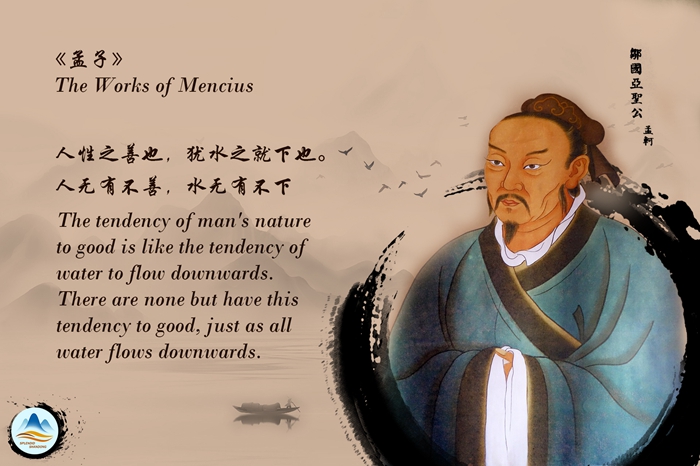
Mencius
Introduction
Mencius, also known as Mengzi or Meng Ke, was one of the most influential philosophers in Chinese history, living during the Warring States period (372-289 BC). As a significant figure in Confucian philosophy, he is recognized for his contributions to the development and enrichment of Confucianism, emphasizing the inherent goodness of human nature and ethical conduct in governance. His teachings have greatly impacted Chinese thought and are recorded in the classical text, The Works of Mencius, which offers profound insights into moral cultivation and human nature.
Philosophical Contributions
Mencius's philosophy revolves around several key concepts, including the inherent goodness of human nature, the importance of benevolent governance, and the concept of ren, or humaneness. He argued that humans are innately good and possess a moral sense akin to sprouts that need nurturing to grow. This belief stood in contrast to other contemporary schools of thought that viewed human nature as inherently selfish or evil.
Mencius also emphasized the role of a benevolent ruler and government. He believed that a ruler should act in the best interest of the people, advocating for policies that promote social harmony and welfare. His ideas on governance were centered around the "kingly way," which combined moral virtue with political power to create a stable and prosperous society.
Influence and Legacy
Mencius's teachings have had a lasting influence on Chinese culture and philosophy. His ideas contributed significantly to the development of Confucian thought, particularly in the areas of ethics, politics, and education. The emphasis on benevolent governance and the moral responsibilities of leaders can be seen in the administrative practices of various Chinese dynasties, reflecting Mencian principles.
In modern times, Mencius's thoughts remain relevant, with scholars and leaders often referring to his philosophy when discussing issues related to governance, social justice, and the cultivation of moral character. His belief in the goodness of human nature continues to inspire debates on human behavior and ethics, both within and beyond China.
Mencius in Contemporary Discourse
Mencius's ideas have been the subject of numerous scholarly discussions and international forums. For example, the Oriental Civilization Forum has highlighted the wisdom of Mencius in addressing modern societal challenges, such as sustainable development and cultural exchange. His thoughts on benevolent governance and social harmony are often cited as valuable contributions to building a community with a shared global future.
His work has also been incorporated into educational curricula worldwide, with books like "My First Chinese Studies Lesson" and "Hi! Sages from China" introducing Mencius's philosophical ideas to young readers globally. Additionally, his teachings have been translated into various languages, allowing for a broader understanding and appreciation of his contributions to philosophy.








