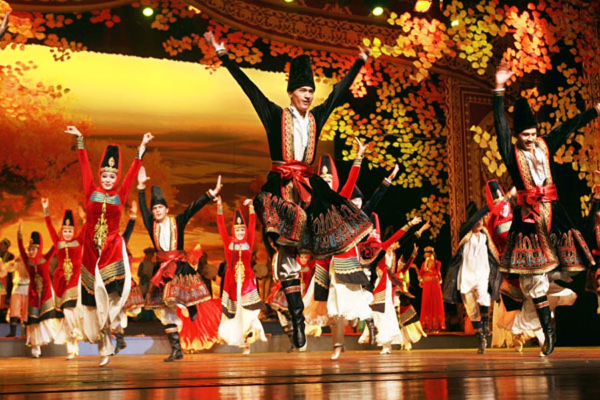
Meshrep
Introduction
Meshrep is an essential cultural phenomenon among the Uygur people, predominantly residing in China's Xinjiang Uygur autonomous region. The term "Meshrep" translates to "forever gathering" in the Uygur language, reflecting its role as a social and cultural event that brings communities together. This gathering is a composite of various traditional art forms, including music, dance, drama, folk arts, acrobatics, oral literature and games, making it a quintessential expression of Uygur heritage.
Meshrep events serve as platforms for cultural transmission, moral education and community cohesion. It is recognized as a significant cultural carrier of Uygur traditions and has been included in the List of Intangible Cultural Heritage in Need of Urgent Safeguarding since 2010.
Historical Background
Meshrep has evolved, reflecting the socio-economic and cultural dynamics of the Uygur community. Historically, these gatherings were held to celebrate special occasions such as weddings, festivals and seasonal changes. The integration of various art forms within Meshrep, such as Uygur muqam, showcases the cultural exchanges along the Silk Road, highlighting a blend of Arab-Persian influences and local traditions. Over time, Meshrep has adapted to changing circumstances while retaining its core functions of education and social regulation.
Structure and Components
Music and dance are integral components of Meshrep, with Uygur muqam serving as a cornerstone of the event's artistic expression. Muqam is a traditional music form that combines intricate melodies and rhythms with expressive dance movements, creating a dynamic cultural performance. The music features a variety of traditional instruments, such as the dutar and the tanbur, which produce unique sounds characteristic of Uygur music. Dance performances during Meshrep are often vibrant and energetic, showcasing the agility and grace of the performers.
Poetry and storytelling are also vital elements of Meshrep, contributing to the event's role as a repository of oral literature. These narrative forms serve to convey historical tales, moral lessons and cultural wisdom, enriching the participants' understanding of their heritage. Storytellers, often respected elders or skilled performers, captivate audiences with their vivid recitations and engaging expressions, bringing to life the stories of ancestors and legendary figures. Poetry, often recited or sung, highlights the linguistic richness and creativity of the Uygur language, further enhancing the cultural depth of Meshrep gatherings.
Cultural Significance
Meshrep holds a pivotal role in the cultural and social life of the Uygur people. It is not merely an entertainment event but a vital component of community life that reinforces social bonds and cultural identity. The event provides a space where traditional values and practices are passed down through generations, ensuring the continuity of Uygur cultural heritage. Participants engage in various performances that reflect the community's values, beliefs and norms, thereby fostering a sense of belonging and cultural pride.
Meshrep embodies several symbolic meanings and values central to Uygur culture. It is a celebration of unity and collective identity, as it brings together people of different ages and backgrounds. The integration of music and dance within the event symbolizes the seamless blend of cultural influences that have shaped Uygur traditions over the centuries. Additionally, Meshrep emphasizes the values of hospitality, generosity, and mutual respect, which are central to Uygur social life.
Preservation and Promotion
Recognizing the cultural significance of Meshrep, various efforts have been made to protect and preserve this intangible cultural heritage. These efforts include documentation and research initiatives aimed at recording and analyzing the traditional practices of Meshrep. Educational programs, such as those offered by the Xinjiang Arts University, play a crucial role in training new generations of performers and cultural custodians. Government and non-government organizations have also invested in projects to support the transmission of Meshrep, ensuring that its traditions are passed down to future generations.








