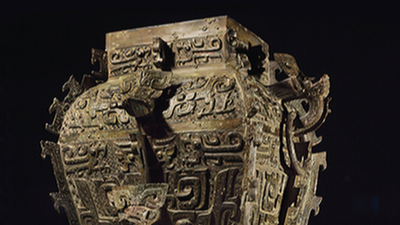
Minfanglei
Introduction
The Minfanglei is a large ritualistic bronze wine vessel originating from the Shang Dynasty (1600 BC - 1046 BC). It is renowned for its historical, artistic, and cultural significance, representing one of the greatest achievements of Chinese bronze craftsmanship during the Shang Dynasty's golden era. Unearthed in 1919 in Taoyuan county, Hunan province, the Minfanglei is distinguished by its intricate design and the epigraphs engraved on its bottom, which led to its naming. It is the largest vessel of its kind ever discovered in China, showcasing the advanced metallurgical skills and artistic sensibilities of ancient Chinese civilization.
The Minfanglei gained international attention after being sold to foreign collectors in the early 20th century. It was later auctioned multiple times across countries such as the United States, the United Kingdom, France, and Japan. In 2001, the vessel fetched a record-breaking price of 9.246 million US dollars at a Christie's auction, marking a milestone in the global appreciation of Asian art. After being lost overseas for nearly a century, the Minfanglei was repatriated to China in 2014, thanks to the collaborative efforts of Chinese collectors and institutions. It is now permanently preserved at the Hunan Provincial Museum.
Description and Features
Material and Craftsmanship
The Minfanglei is crafted from bronze, a material that was central to the Shang Dynasty's metallurgical advancements. The vessel's construction showcases the sophisticated techniques employed by ancient Chinese artisans, including casting and intricate engraving. The bronze used in the Minfanglei is of exceptional quality, contributing to its durability and the preservation of its elaborate designs over centuries.
The craftsmanship of the Minfanglei reflects the Shang Dynasty's mastery in bronze art. The vessel features intricate patterns and motifs, including animal figures and geometric designs, which are characteristic of Shang Dynasty bronze ware. These decorative elements not only highlight the artistic excellence of the era but also serve as symbolic representations of the cultural and spiritual beliefs of the time.
Design and Symbolism
The Minfanglei's design is both functional and symbolic. As a wine vessel, it was used in ritualistic ceremonies, emphasizing its role in the religious and social practices of the Shang Dynasty. The vessel's large size and elaborate decorations suggest that it was likely reserved for significant ceremonies involving the elite or ruling class.
The engraved epigraphs on the bottom of the Minfanglei provide valuable insights into the Shang Dynasty's written language and cultural practices. These inscriptions are believed to document the vessel's ownership or its ceremonial purpose, offering a glimpse into the societal structure and traditions of ancient China.
The motifs and patterns adorning the Minfanglei are rich in symbolism. Animal figures, such as dragons and phoenixes, are commonly featured, representing power, prosperity, and spiritual protection. The geometric designs reflect the Shang Dynasty's aesthetic sensibilities and their emphasis on harmony and balance.
Preservation and Exhibition
The Minfanglei is now permanently preserved at the Hunan Provincial Museum, where it is displayed as a testament to China's rich cultural heritage and artistic achievements. The museum has committed to ensuring the vessel's preservation and has vowed never to trade it again, recognizing its historical and cultural value.
The repatriation of the Minfanglei in 2014 involved meticulous planning and collaboration between Chinese collectors and institutions. The vessel was escorted by a professional international insurance company and a transportation team to ensure its safe return. A ceremony was held in Changsha, Hunan province, to celebrate the reunion of the vessel's body and lid, marking the culmination of efforts to restore this significant artifact.
The Minfanglei has been featured in exhibitions and cultural programs, including the National Treasure variety show, which aims to bring Chinese cultural relics to a wider audience. These initiatives highlight the vessel's importance and contribute to the promotion of Chinese cultural heritage on a global scale.








