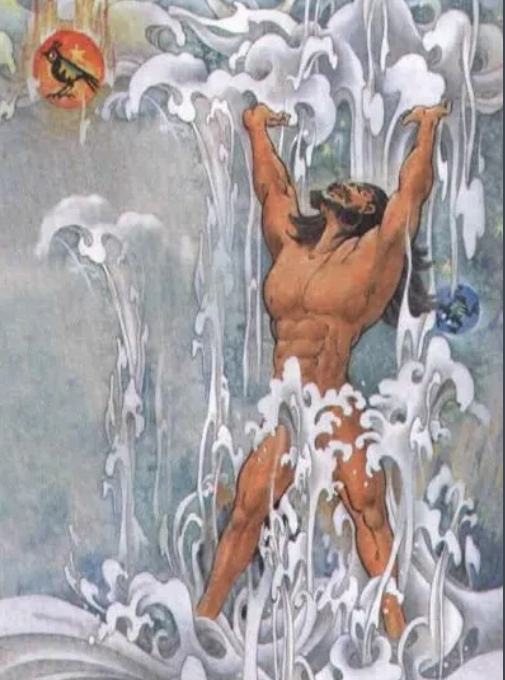
Pangu
Introduction
Pangu is an influential figure in Chinese mythology known for creating the world. The myth of Pangu is integral to Chinese cultural storytelling and has been depicted in various artistic forms, including documentaries that aim to explore ancient Chinese history and mythology.
Mythological Background
Pangu is a foundational figure in Chinese mythology, often credited as the first living being and the creator of the world. According to ancient Chinese myth, Pangu emerged from a cosmic egg that contained the chaotic mass of the universe. As he grew, he separated the earth from the sky with his axe, becoming a central figure in the Chinese creation myth. After Pangu's death, his breath became the wind, mist and clouds; his voice, thunder; his left eye, the Sun; his right eye, the Moon; his head, the mountains and extremes of the world; his blood, rivers; his muscles, fertile land; his facial hair, the stars and Milky Way; his fur, bushes and forests; his bones, valuable minerals; his bone marrow, precious jewels; his sweat, rain; and the fleas on his fur carried by the wind became animals.
The myth of Pangu is deeply intertwined with Chinese cosmology, as it signifies the emergence of order from chaos and is often seen as a narrative that explains the origins of the universe.
Pangu's tale is not only significant in itself but also as it paved the way for subsequent stories about Chinese mythological deities like Fuxi, Nyuwa, and Shennong, who are believed to have further shaped civilization. These myths collectively explore ancient Chinese themes of creation, the cosmic order, and the balance of life and death, showcasing a rich tapestry of storytelling that has been passed down through generations. The mythological narrative of Pangu continues to influence Chinese culture, offering insights into how ancient societies viewed the universe and their role within it.
Cultural Impact
Pangu's story is not just a simple creation myth; it holds significant cultural and philosophical meaning. The tale is often interpreted as a representation of the natural order and harmony within the universe. It reflects ancient Chinese beliefs about the interconnectedness of all things and the cyclical nature of life and death. The myth of Pangu has been passed down through generations, influencing Chinese art, literature, and cultural practices.
Artistic Representations
The story of Pangu has inspired numerous artistic interpretations. In the documentary series "China," director Li Dongshen used a unique approach by employing 183 young artists to create 1,000 paintings that depict the mythological narratives of Pangu and other deities. These paintings, influenced by traditional Chinese artistic styles, were animated using computer graphics to enhance their visual impact. This innovative method of storytelling allowed for a rich and immersive exploration of mythology through the lens of contemporary art.
Historical Significance
The myth of Pangu plays a crucial role in the broader context of Chinese history and identity. It serves as a cultural touchstone that reflects the values, beliefs, and historical developments of ancient China. By examining the legacy of Pangu through different lenses—be it mythology, art, or archaeology—scholars and creatives continue to explore the profound impact this myth has on Chinese civilization.








