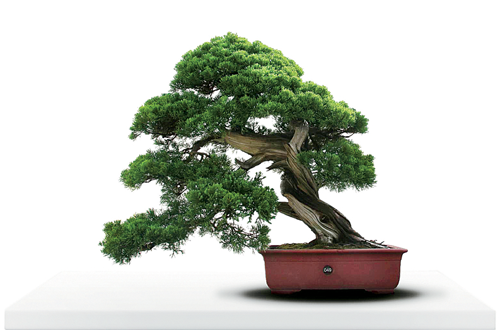
Penjing
Introduction
Penjing, often considered the precursor to the Japanese bonsai, is an ancient Chinese art form that involves the creation of miniature landscapes in pots. This artistic practice involves the meticulous cultivation of small trees and plants, combined with the use of rocks and soil to create a naturalistic scene reminiscent of larger natural landscapes. Penjing is not simply about creating a small tree in a pot; it embodies the essence of natural landscapes, capturing the beauty and spirit of nature in a confined space.
Historical Background
The history of penjing can be traced back to the Han Dynasty (206 BCE - 220 CE), when the art form began to take shape. It was during the Tang Dynasty (618-907) that penjing gained more formal recognition and further development. The esteemed poet Bai Juyi, who served as an official in Suzhou, is noted for creating miniature landscapes using stones in pots. This practice gained prominence during the Song Dynasty (960-1279), with local poet Fan Chengda contributing to the popularity and development of Suzhou penjing. The art of penjing is deeply intertwined with the aesthetics of the Chinese literati, whose refined taste influenced the designs and styles of these miniature landscapes.
During the Ming Dynasty (1368-1644), Suzhou experienced a cultural renaissance, with the city becoming a hub for literati painting and artistic expression. This period saw a significant evolution in penjing, with designs reflecting the abstract and imaginative styles found in literati paintings. This unadorned yet elegant approach to penjing continues to be a defining characteristic of Suzhou-style penjing.
Cultural Significance
Penjing occupies a unique place in Chinese culture, representing a harmonious blend of art, nature, and philosophy. The practice of penjing reflects the Chinese appreciation for nature and the desire to recreate natural beauty on a smaller scale. It allows individuals to engage with nature intimately, fostering a sense of tranquility and contemplation. The creation and maintenance of penjing require patience and dedication, attributes that align with the spiritual ideals of Chinese culture.
In Suzhou, a city renowned for its classical gardens, penjing is considered an integral component of garden design. These miniature landscapes mirror the larger gardens, capturing the essence of Suzhou's architectural and natural aesthetics. The cultivation techniques and artistic principles of Suzhou-style penjing were recognized as a national-level intangible cultural heritage in 2011, underscoring its importance in Chinese cultural heritage.
Techniques and Styles
Penjing involves a variety of techniques and styles, each contributing to the overall aesthetic and artistic expression of the miniature landscape. The process begins with selecting suitable plants and trees, which are then pruned to achieve the desired form. Rocks and soil are carefully arranged to create a balanced composition that evokes the feeling of a natural landscape.
The Suzhou style of penjing is characterized by its elegant simplicity and abstract representation of nature. Designers often leave open spaces in their compositions, allowing the viewer's imagination to fill in the blanks, much like the approach in traditional Chinese ink paintings. This style emphasizes the beauty of simplicity, using minimal elements to suggest a larger, more complex natural setting.
Shanghai-style penjing, on the other hand, is known for its free forms and dynamic lines, drawing inspiration from natural landscapes and Chinese ink painting. This style incorporates a wide range of plant species, including pines, cypresses, and boxwoods, to create vibrant and colorful compositions.
Modern Developments and Global Influence
In recent years, penjing has experienced a resurgence in popularity, both in China and internationally. Cities like Suzhou have become centers for the cultivation and appreciation of penjing, with institutions and exhibitions dedicated to showcasing this traditional art form. Entrepreneurs and enthusiasts have embraced penjing, experimenting with new styles and techniques to revitalize the art.
Penjing's influence can be seen in other countries, notably in Japan, where it inspired the development of bonsai. The art has also gained a following in regions such as Korea and Vietnam, where it has influenced local horticultural practices and artistic traditions.
In contemporary settings, penjing serves as a bridge between cultures, offering a unique perspective on Chinese art and philosophy. International collaborations and exhibitions have helped to promote penjing globally, fostering a deeper understanding of its cultural significance and artistic potential. Through these efforts, penjing continues to captivate and inspire people around the world, maintaining its status as a treasured aspect of Chinese cultural heritage.
Key Figures and Institutions
Tan Qiuyi, a leading horticulturist in Suzhou, has dedicated four decades to the study and cultivation of penjing. His work at Wanjing Shanzhuang, a renowned penjing garden in Suzhou, has contributed significantly to the preservation and continuation of this art form. Tan emphasizes the importance of patience and respect for nature in the practice of penjing, recognizing its role as a reflection of traditional Chinese culture.
The Shanghai Museum and the Shanghai Botanic Garden have played pivotal roles in promoting penjing as both an art form and cultural heritage. Through exhibitions and educational programs, these institutions have introduced penjing to a wider audience, highlighting its historical roots and contemporary relevance.
The Huntington Library in California is home to one of the largest classical-style Chinese gardens in the world, featuring a dedicated area for penjing. The Verdant Microcosm, a penjing courtyard within the garden, showcases the intricate beauty and artistic potential of these miniature landscapes, bridging cultural gaps and fostering cross-cultural appreciation.








