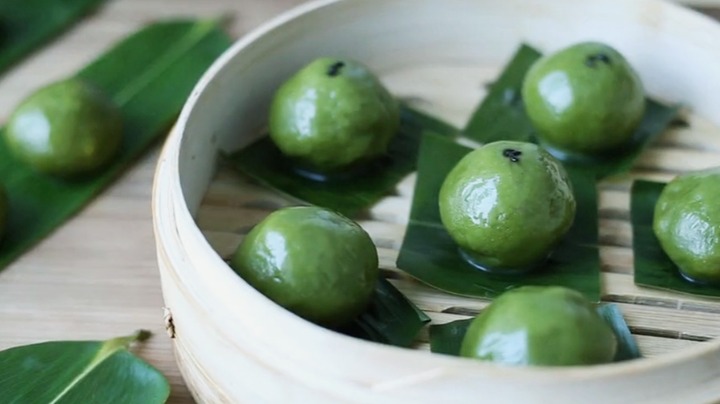
Qingtuan
Introduction
Qingtuan, also known as green rice balls, is a traditional Chinese delicacy originating from the Jiangnan region, south of the Yangtze River. These small, round cakes are made from glutinous rice flour and mixed with the juice of freshly pounded edible wild herbs, such as mugwort or barley grass, lending them a distinctive, vibrant green color. Typically consumed around the Qingming Festival or Tomb-Sweeping Day, Qingtuan holds a significant place in Chinese culture as both a culinary treat and a symbol of springtime renewal.The delicacy is often filled with sweet or savory fillings, such as sweet red bean paste or, more recently, innovative combinations like salted egg yolk and pork floss.
History
It is believed that Qingtuan was first created as a sacrificial offering for the Qingming Festival, a time when Chinese families honor their ancestors.The tradition of offering food at tombs is deeply rooted in Chinese culture, and Qingtuan emerged as a popular choice due to its seasonal availability and symbolic meaning. Over time, the practice of consuming Qingtuan expanded beyond religious rituals, becoming a beloved seasonal snack enjoyed by people. The Qingming Festival itself, which occurs around early April, marks a transition in the agricultural calendar, coinciding with warmer weather and increased rainfall - conditions that foster the growth of the herbs used in Qingtuan.
Ingredients and Preparation
Main Ingredients
The key components of Qingtuan are glutinous rice flour, which forms the base of the dough, and the juice from freshly pounded green herbs, primarily mugwort or barley grass. These herbs not only impart the unique green color to the dough but also contribute a subtle, fragrant aroma. Traditional fillings include sweetened red bean paste, which provides a delightful contrast to the mild, grassy flavor of the dough. Modern variations have introduced a wide array of fillings, ranging from savory salted egg yolk with pork floss to creative combinations like jujube paste and pine nuts.
Preparation Process
The preparation of Qingtuan involves several meticulous steps. First, the chosen herb is cleaned and ground into a fine paste, from which the juice is extracted. This juice is then mixed with glutinous rice flour to form a smooth, pliable dough. The dough is divided into small, equal portions, each of which is flattened and filled with a desired filling before being carefully shaped into a ball. Once assembled, the Qingtuan are steamed until cooked through, resulting in a soft, chewy texture. This careful process ensures that Qingtuan maintains its traditional taste and texture, while allowing for creative variations in fillings.
Cultural Significance
Qingtuan's cultural significance is closely linked to the Qingming Festival, a time of remembrance and renewal in Chinese tradition. The festival is marked by activities such as tomb-sweeping, kite-flying, and enjoying the outdoors, all of which symbolize the end of winter and the beginning of spring. Qingtuan, with its vibrant green hue and seasonal ingredients, embodies this spirit of renewal. It serves as both a tribute to ancestors and a celebration of nature's rebirth. In addition to its role in Qingming rituals, Qingtuan reflects the broader Chinese culinary philosophy of consuming seasonal foods, aligning with the natural rhythms of the year.
Regional Variations
While Qingtuan is most closely associated with the Jiangnan region, variations of this delicacy can be found throughout China. In different areas, the herbs used for coloring and flavoring the dough may vary, as do the fillings. Some regions might favor more savory fillings, reflecting local taste preferences and available ingredients. This regional diversity not only highlights the adaptability of Qingtuan but also showcases the rich culinary tapestry of China.








