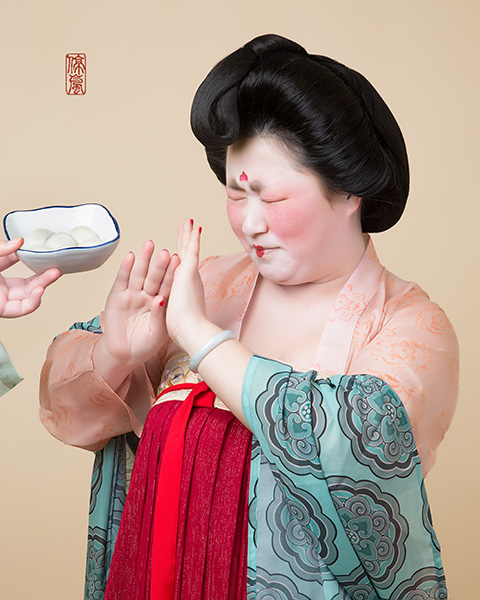
Ruqun
Overview
Ruqun is a traditional form of Chinese attire that dates back to ancient times, particularly popular during the Tang Dynasty (618-907). It primarily consists of two pieces: a top garment known as the "ru" and a long skirt called the "qun." This attire is a quintessential component of hanfu, the historical clothing of the Han Chinese people. Over the centuries, Ruqun has been admired for its aesthetic appeal and cultural significance, representing the elegance and grace of ancient Chinese fashion.
The Tang women dressed in sets of garments, each set a unique image in itself. In general, the Tang women's dresses can be classified into three categories:
The traditional ruqun or double layered or padded short jacket that was typical of central China; the hufu, or alien dress that came from the Silk Road;, as well as the full set of male garments that broke the tradition of the Confucian formalities.
Ruqun is made up of the top jacket and long gown and a skirt on the bottom. The Tang women inherited this traditional style and developed it further, opening up the collar as far as exposing the cleavage between the breasts. This was unheard of and unimaginable in the previous dynasties, in which women had to cover their entire body according to the Confucian classics. But the new style was soon embraced by the open-minded aristocratic women of the Tang Dynasty.
Cultural Significance
During the Tang Dynasty, Ruqun was commonly depicted in paintings and sculptures, often worn by court ladies. Notably, the famous Tang painter Zhou Fang frequently illustrated noblewomen in Ruqun, capturing their hairstyles, make-up, and the intricate details of their attire. His works, such as Zan Hua Shi Nyu Tu (Court Ladies with Head-pinned Flowers), serve as essential references for contemporary recreations of historical costumes in films and television dramas.
Modern Representation
In modern times, Ruqun continues to captivate cultural enthusiasts, as evidenced by recent portrayals that have garnered attention on social media platforms like Sina Weibo. For instance, Zheng Qi, a Chongqing-based model and hanfu store owner, gained popularity for her portrayal of a Tang Dynasty woman wearing Ruqun. Her series of photos, which humorously depict her indulging in yuanxiao during the Lantern Festival, resonated with many netizens and received widespread acclaim.
Contemporary Trends
Ruqun and other traditional Hanfu styles have seen a resurgence in popularity, fueled by a renewed interest in cultural heritage and identity among young Chinese. This trend is part of a broader cultural renaissance, where historical narratives and traditional arts are being rediscovered and appreciated anew.
By making traditional fashion accessible and relatable, hanfu designers are not only preserving cultural heritage but also creating a platform for dialogue about beauty standards, cultural identity, and inclusivity. The modern representation of Ruqun, especially in plus-sized versions, challenges conventional beauty norms and celebrates the diversity that was once cherished in ancient times. Article reference1. Hanfu fan recreates the 'plump' Tang look with series of pictures. chinadaily.com.cn. 20182. Woman's costume in the Tang Dynasty. www.chinadaily.com.cn. 2009Photo Gallery(5 pictures)CategoriesLifestyleTagTraditional ClothingCatalogue1. Overview2. Cultural Significance3. Modern Representation4. Contemporary Trends- - - []








