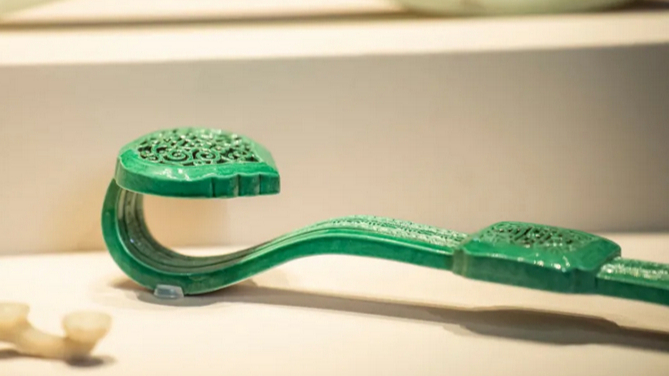
Ruyi
Introduction
Ruyi is a traditional Chinese scepter-like object that has been highly esteemed throughout Chinese history, symbolizing good fortune and power. The term "Ruyi" translates to "as you wish" in English, reflecting its significance as a charm or an embodiment of auspiciousness. Originating as a utilitarian object for scratching one's back, the Ruyi evolved into a ceremonial and decorative object, often crafted from precious materials and embellished with intricate designs.
Historical Significance
The Ruyi has been a significant cultural artifact since the Han Dynasty (206 BC – 220 AD), but it gained primary ceremonial importance during the Ming (1368–1644) and Qing dynasties (1644–1911). During these periods, the Ruyi was often presented as a gift to express best wishes, or used in imperial settings as a symbol of authority and benevolence. It became a common motif in art, furniture, and jewelry, symbolizing the wish for everything to go smoothly.
The Palace Museum in Beijing houses a vast collection of Ruyi, including pieces from the Ming and Qing dynasties made from various materials such as jade, bamboo, metal, dental bones, and porcelain. This collection highlights the Ruyi's evolution from a simple tool to an opulent artifact representing imperial power and cultural elegance. A notable exhibition, Auspiciousness: Ruyi at the Palace Museum, showcased 158 selected pieces from this collection, illustrating the historical and cultural significance of the Ruyi.
Ruyi in Art and Design
Apart from its presence in television dramas, the Ruyi motif has been a significant element in Chinese art and design. It appears frequently in paintings, porcelain, and furniture, often as a decorative element symbolizing good wishes. This motif is also evident in architectural designs, garden layouts, and various decorative arts, where its form is integrated into the overall aesthetic to convey auspiciousness and good fortune.
The unique shape of the Ruyi, often likened to a lingzhi mushroom or a cloud, has inspired numerous artistic interpretations. Artists and craftsmen have tailored this iconic form into various materials, creating highly valued art pieces and luxurious objects such as jewelry, embroidered textiles, and intricate carvings.
Modern Interpretations and Cultural Influence
In contemporary times, the Ruyi continues to be a symbol of cultural heritage and artistic inspiration. Its influence extends beyond traditional forms, inspiring modern artists and designers who reinterpret this ancient symbol in innovative ways while preserving its cultural essence. This enduring symbol of prosperity and well-being integrates traditional aesthetics with modern sensibilities, bridging the past and present in Chinese art and culture.
The Ruyi's presence in modern media, exhibitions, and cultural products underscores its ongoing relevance and appeal, demonstrating how traditional symbols can maintain cultural significance in a rapidly changing world. It serves as a reminder of the depth and continuity of Chinese cultural traditions, offering insights into the values and aesthetic principles that have shaped Chinese art and society over centuries.








