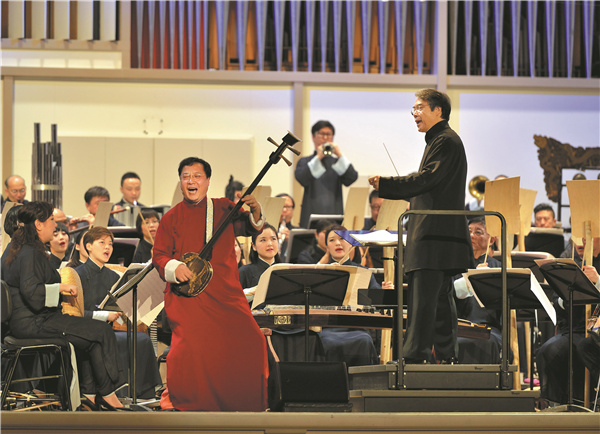
Sanxian
Introduction
The Sanxian, also known as the "three-stringed Chinese lute," is a traditional Chinese musical instrument renowned for its distinctive sound and historical significance. Characterized by a long, fretless fingerboard and three strings, the Sanxian is capable of producing a wide range of tones, from crisp and percussive to soft and melodic. This instrument is an integral part of Chinese folk music and has been utilized to convey emotions and stories through its expressive sound.
Sanxian comes in various sizes, including the large version that is especially well-suited for performing folk music. With no frets, musicians rely on muscle memory and auditory skill to accurately play the desired pitches. The instrument is versatile, allowing for different playing techniques that produce either a vibrant, loud sound or a softer, harmonious melody.
The Sanxian holds a unique position in the realm of traditional Chinese music, where it often serves as a principal instrument in ensembles. Its ability to mimic human vocal intonations and its deep integration into cultural narratives make it much more than just a musical tool. Modern musicians have also embraced the Sanxian, incorporating it into contemporary genres and showcasing its adaptability and timeless appeal.
History
Origin
Like most folk traditions, it is difficult to trace the origins of the sanxian. By some accounts, it may date back to the Qin Dynasty (221-206 BC). Images of similar instruments can be found in a Southern Song Dynasty (1127-1279) sculpture, and the characters sanxian, which literally mean "three strings", first appeared in a Ming Dynasty (1368-1644) text.
Development
The development of the Sanxian has been marked by both continuity and change. While the basic structure of the instrument has remained consistent, its role and usage have evolved. During the early 20th century, the Sanxian was popular among students alongside other traditional string instruments like the pipa and guzheng. However, the advent of Western orchestral styles, which favored softer harmonies, led to a decline in its popularity.
Despite this, the Sanxian has experienced a resurgence in recent years as musicians and cultural enthusiasts seek to preserve traditional forms of Chinese music. Notable musicians have championed the instrument, showcasing its unique sound in both traditional and contemporary settings. This revival has helped to reaffirm the Sanxian's place in both historical and modern musical landscapes.
Design and Construction
Materials
The construction of the Sanxian involves a combination of traditional and natural materials, carefully selected to enhance its acoustic properties. The instrument's body typically consists of a long, thin neck attached to a rounded sound box. This sound box is traditionally covered with snake skin, which contributes to the instrument's distinctive tone and resonance. The skin's texture and thickness play a crucial role in shaping the Sanxian's sound, allowing it to produce both clear and sonorous notes.
The strings of the Sanxian are usually made of silk or synthetic materials, stretched tightly over the fingerboard. These strings are integral to the instrument's unique sound, providing the tension necessary for both the crisp, percussive beats and the soft, harmonious melodies that the Sanxian is known for.
Dimensions
The dimensions of the Sanxian can vary, but it is generally around 120 centimeters in length. The fingerboard itself is approximately 80 centimeters long, providing ample space for the musician to glide between pitches. The instrument's size can influence its sound and playability, with larger versions often used in folk music settings for their robust and resonant tones.
The striking appearance of the Sanxian, with its elongated neck and compact sound box, makes it easily recognizable. Its design not only facilitates the production of its characteristic sound but also reflects the instrument's historical and cultural heritage.
Playing Technique
Basic Techniques
Playing the Sanxian involves a combination of plucking, slapping, and strumming techniques, each contributing to the instrument's unique sound. The basic method of playing involves either slapping the strings with the thumb or picking them with the fingers. Slapping produces a strong, forceful beat with a clear, bright sound, while picking results in a softer, more harmonious tone. These contrasting techniques are often described using the yin-yang concept, with slapping considered yang (masculine) and picking considered yin (feminine).
Musicians use the fingers of their left hand to manipulate the strings, allowing for glissando effects and expressive pitch variations. The fretless design of the Sanxian demands a high degree of skill and precision, as players must rely on their ear and muscle memory to achieve accurate intonation.
Advanced Techniques
Advanced techniques for playing the Sanxian include intricate fingerwork, rapid string crossings, and dynamic changes in tone and volume. Skilled musicians can achieve a wide range of effects, from delicate, whispering notes to vigorous, resonant rhythms. These advanced techniques are often showcased in complex compositions that highlight the Sanxian's versatility and expressive potential.
Notable players of the Sanxian have developed their own unique styles, incorporating elements of improvisation and personal expression. This adaptability allows the instrument to shine in a variety of musical contexts, from traditional ensembles to contemporary fusion genres.
Notable Players
Several musicians have gained recognition for their mastery of the Sanxian, contributing to the instrument's enduring popularity and cultural significance. Zhao Taisheng, a prominent Sanxian player with the Hong Kong Chinese Orchestra, is known for his skillful performances and dedication to preserving the traditional art of the Sanxian. His efforts to introduce the instrument to wider audiences have helped to ensure its continued relevance in modern music.
Wang Yu, another notable Sanxian musician, has explored the instrument's versatility by blending traditional sounds with electronic music. His innovative compositions highlight the Sanxian's ability to adapt to contemporary musical trends while maintaining its distinctive character.
Variants
The Sanxian is available in several variants, each with unique characteristics suited to different musical styles and settings. The large Sanxian is particularly popular for folk music, offering a deep, resonant sound that complements traditional melodies. In contrast, the treble Sanxian produces a crisp, clear tone, making it well-suited for more intricate compositions and solo performances.
These variants allow musicians to choose an instrument that best matches their personal style and the musical context in which they perform. The diversity of the Sanxian's forms contributes to its adaptability and enduring appeal across various genres and cultural settings.
Influence on Other Instruments
The Sanxian has also influenced the development of other musical instruments, both within and beyond China. Its structural and acoustic characteristics have inspired the creation of instruments such as the Japanese shamisen, which shares similarities in design but features a longer neck and broader body. This cross-cultural exchange illustrates the Sanxian's impact on the musical traditions of neighboring regions and its role in the global evolution of stringed instruments.
Through its enduring presence in traditional music and its influence on contemporary genres, the Sanxian continues to be a symbol of cultural continuity and innovation. It serves as a testament to the rich musical heritage of China and its ongoing contribution to the world's musical landscape.








