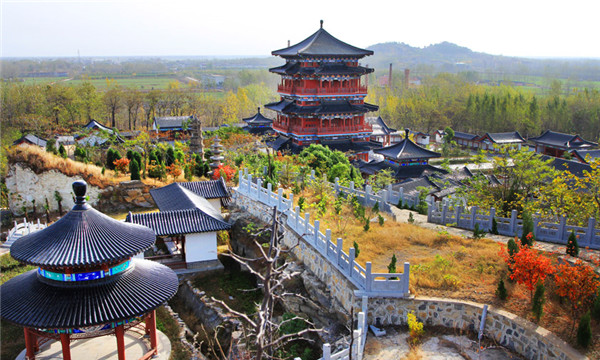
Shangqiu
Overview
Shangqiu, located in the eastern part of Henan province, China, is a city steeped in history and cultural significance. Known as one of the ancient capitals of China, Shangqiu has played a vital role in Chinese history, having been the first capital of the Shang Dynasty (c. 16th century-11th century BC) and later serving as the capital of various states throughout its long history.
The city is rich in archaeological treasures and is home to significant discoveries that offer insights into ancient Chinese civilization. Over the years, numerous artifacts and structures have been unearthed, showcasing the region's historical importance. Shangqiu's cultural heritage is further exemplified by its contributions to the arts, particularly in opera, making the city a focal point for cultural expression and innovation.
Archaeological Discoveries
Shangqiu's archaeological significance is highlighted by several important discoveries that have shed light on ancient Chinese history and culture. One notable discovery in Shangqiu is the tomb mural from the Western Han Dynasty (206 BC-AD 24) found in the tomb of King Gong of the Liang State on Mangdang Mountain. Featuring a flying dragon, a vermilion bird and a white tiger, it is one of the nine treasures in the permanent collection of the Henan Museum. The mural's intricate design and cultural symbolism provide valuable insights into the funerary practices and beliefs of the time, particularly in guiding the soul of the deceased to the afterlife.
Cultural Contributions
Shangqiu has made significant contributions to Chinese culture, particularly in the realm of opera. The city is closely associated with Yuju opera, one of the five major operas in China. Originating at the end of the Ming Dynasty (1368-1644), Yuju opera is known for its strong rhythm, rhythmic melody, vigorous tones and high expressiveness. It remains popular not only in Henan but also in several other provinces and regions, making it a significant cultural export from Shangqiu.
The Yudong style of Yuju opera, originating from Shangqiu, is characterized by the alternation between natural voice and falsetto to convey impassioned musical themes. This style, alongside others from different regions within Henan province, showcases the diverse vocal techniques and emotional depth of Yuju opera. The opera's rich traditions, role types, costumes and musical instruments contribute to its enduring popularity and cultural significance. Article reference1. Branches used in foundation of ancient city uncovered. chinadaily.com.cn. 20232. Han Dynasty tomb mural depicting four mythological creatures. chinaservicesinfo.com. 20233. Yuju Opera: China's leading local opera with the largest number of performers and troupes. chinaservicesinfo.com. 2019Photo Gallery(2 pictures)CategoriesTourismTagCity TourismHistorical and Cultural CityRelatedHan DynastyYingtian AcademyFour Great AcademiesWangzhuang SiteCatalogue1. Overview2. Archaeological Discoveries3. Cultural Contributions- - - []








