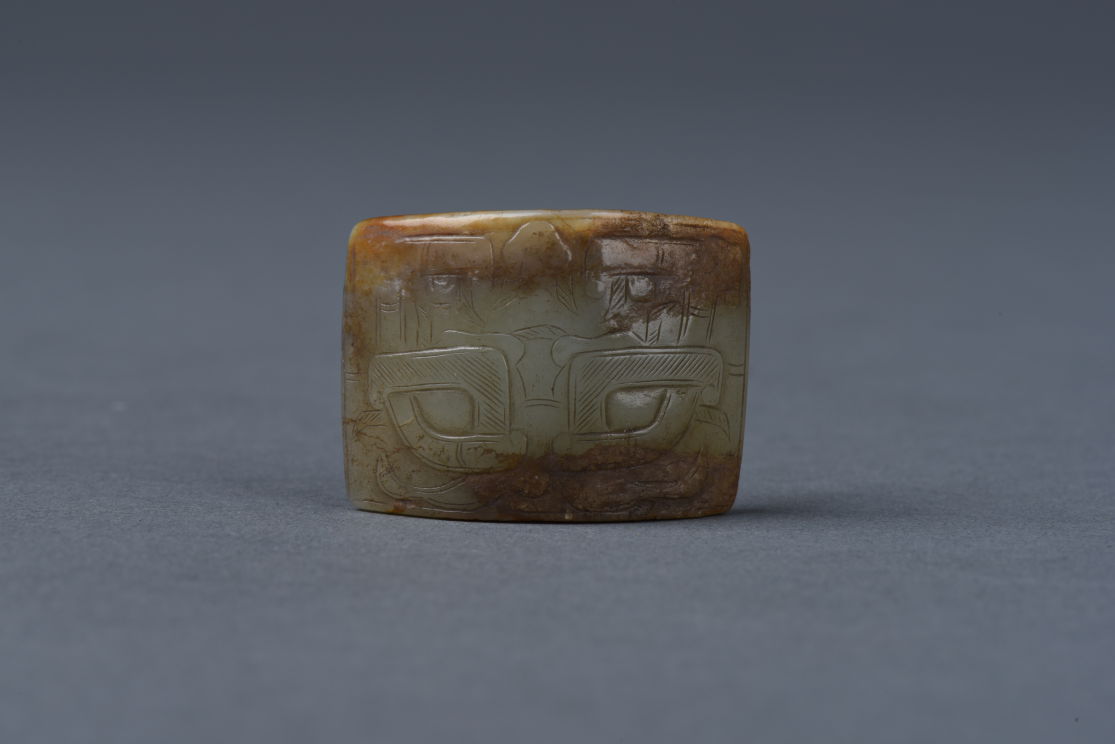
Taotie
Introduction
Taotie is a motif found in ancient Chinese art, prominently featured in bronze vessels and jade artifacts. It represents a mythical creature with an insatiable appetite and is often associated with themes of greed and consumption. The Taotie motif has been a subject of scholarly interest, as it appears across several ancient Chinese cultures and dynasties, from the Liangzhu civilization to the Shang Dynasty (c. 16th century-11th century BC).
Archaeologists identified the decoration on a jade cong from Liangzhu as featuring the Taotie motif. This civilization is known for its advanced artistry, especially in jade carving, where the Taotie motif often appeared alongside human and divine figures.
During the Shang Dynasty, the Taotie motif became prevalent in bronze art. The motif was typically displayed on ritual vessels, such as the square bronze ding and bronze lei, where it served both decorative and ceremonial purposes. The Shang era marked a significant period in the development of bronze casting techniques, with the Taotie motif being a central artistic theme.
Cultural Significance
In mythological narratives, Taotie is regarded as a creature with an insatiable hunger, a representation that has been interpreted in various ways by historians and scholars. Some suggest that it reflects the societal values and concerns of ancient Chinese civilizations, particularly regarding resource consumption and moral conduct.
In ancient times, the Taotie motif was not only decorative but also served as a cultural and religious symbol. It was believed to have spiritual significance, possibly as a protective emblem or as a means to communicate with the divine. This duality of function—both artistic and religious—demonstrates the complexity and richness of ancient Chinese art and beliefs.
Artistic Representations
The Taotie motif is characterized by its symmetrical face, typically with large eyes, and sometimes featuring horns, fangs, or claws. Although its representation varies across different artifacts, the motif generally maintains a consistent stylistic form, embodying both abstract and realistic elements. This has allowed it to be a versatile motif in various artistic mediums, such as bronze, jade, and pottery.
Archaeological Discoveries
Significant archaeological findings have provided insights into the Taotie motif's historical evolution and cultural impact. Excavations at sites such as Yinxu, the last capital of the Shang Dynasty, have uncovered numerous bronze vessels adorned with the Taotie motif. These artifacts offer valuable information about the technological advancements and artistic achievements of ancient Chinese civilizations.
These findings suggest that the motif was not confined to a single region but was part of a broader cultural narrative that spanned various dynasties and geographical areas.








