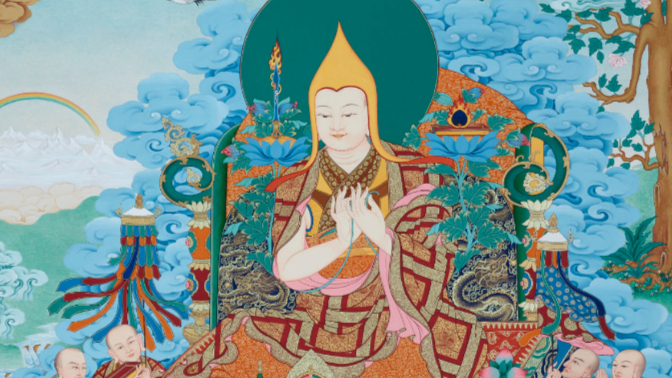
Tsongkhapa
Introduction
Tsongkhapa Lobzang Drakpa (1357-1419) was a prominent Tibetan Buddhist scholar and the founder of the Gelug school of Tibetan Buddhism. Born in the Tsongkha region of Amdo, his teachings and reforms have had a profound and lasting impact on Tibetan Buddhism, influencing not only monastic practice but also the philosophical understanding within the tradition.
Early Life and Education
Tsongkhapa was born in 1357 in the Tsongkha region, which is located in present-day Qinghai province, within the broader Amdo cultural region of Xizang. From a young age, he exhibited exceptional intellectual and spiritual capacities. Engaging in rigorous study under numerous tutors, Tsongkhapa became well-versed in various Buddhist disciplines. His extensive education included teachings from all the major lineages of Tibetan Buddhism that were present at the time, which deeply informed his own reformative approach.
Formation of the Gelug School
In 1409, Tsongkhapa founded the first Ganden Monastery, which marked the beginning of the Gelug school. The Gelug, meaning "virtuous" or "the one with good discipline," emphasized strict monastic discipline, scholastic rigor, and the importance of the Vinaya (Buddhist monastic rules). Tsongkhapa's reforms sought to purify Tibetan Buddhism from what he perceived to be ritualistic excesses and moral laxity.
Philosophical Contributions
Tsongkhapa is especially renowned for his philosophical contributions, particularly his works on Madhyamaka philosophy, which seek to express the middle way between realism and nihilism. His texts, such as the Lamrim Chenmo (The Great Treatise on the Stages of the Path to Enlightenment), have become central to the study and practice of Tibetan Buddhism. Tsongkhapa’s synthesis of Sutra and Tantra, and his stress on the importance of both study and practice, shaped the doctrinal framework of the Gelug school.
Legacy
Tsongkhapa's influence extends beyond the establishment of the Gelug school. His teachings have been integral to the practices of Tibetan Buddhism, shaping the pedagogical and practice-oriented approaches of subsequent generations. His life and works inspired the construction of various important monastic institutions, including Tashi Lhunpo Monastery, founded by his disciple Gedun Drupa, who later became recognized as the First Dalai Lama.
Cultural and Artistic Impact
Not only did Tsongkhapa contribute to the religious and philosophical landscape of Xizang, but he also influenced Tibetan art and culture. The production of thangka paintings and bronze Buddha statues at places like Tashi Lhunpo Monastery was partly inspired by the artistic styles and religious imagery associated with the Gelug tradition. These artworks often depict scenes from Tsongkhapa's life and teachings, helping to propagate his vision and philosophy.








