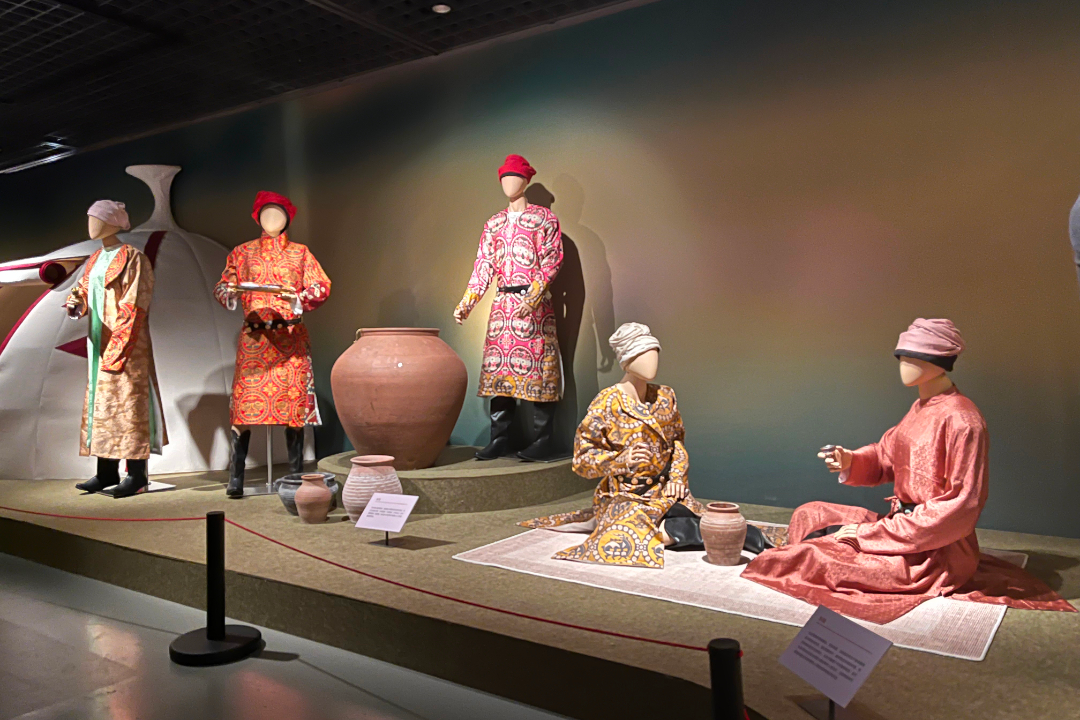
Tuyuhun
Overview
Tuyuhun was a nomadic kingdom that existed between the 4th and 7th centuries in what is now northwest China, specifically the region that encompasses modern-day Qinghai province. The kingdom played a significant role in the history and cultural exchanges along the ancient Silk Road, serving as a bridge between the Chinese dynasties in the east and the western regions. Tuyuhun's legacy is preserved through archaeological discoveries and historical records, which highlight its cultural, economic, and political importance during its time.
Historical Background
The Tuyuhun Kingdom was founded in 312 by Murong Tuyuhun. Murong Tuyuhun had moved his troops to the Qinghai region after conflicts with his brother during the Eastern Jin Dynasty (317–420). The kingdom was named after its founder and became a dominant power in the region for over 350 years. Tuyuhun maintained close ties with the Tang Dynasty (618–907), exemplified by the marriage of Murong Nuohebo, to Tang princess Honghua. This alliance facilitated peaceful economic and cultural exchanges along the Silk Road.
Geographical and Cultural Significance
Situated on the Qinghai-Tibet Plateau, with an average altitude of over 3,000 meters, Tuyuhun's unique geographical location contributed to its distinct cultural identity. The kingdom controlled a section of the southern Silk Road, known as the Tuyuhun Road, which was a vital route for trade and cultural interactions between the East and the West. The region's rich cultural heritage is evident in the archaeological relics found in Qinghai, including colored pottery, copperware, religious artifacts, and silk fabrics.
Archaeological Discoveries
Numerous archaeological findings have shed light on Tuyuhun's history and culture. Highlights include:
Tombs in Dulan county: Excavations in Dulan county have revealed items bearing gold and crystal decorations, reflecting the influence of the Tibetan Tubo Kingdom (618-842), which ended Tuyuhun's reign in 663.
Military and Political Structure
The Tuyuhun Kingdom had a strong military presence, which was crucial for maintaining control over its territory and ensuring the security of the Silk Road. The kingdom's military strength is evidenced by the discovery of a complete set of Tang Dynasty iron armor in the tomb of Murong Zhi, a Tuyuhun general. This armor, consisting of over 2,000 individual plates, provides valuable insights into the craftsmanship and military practices of the time.
Cultural Exchange and Integration
Tuyuhun was a melting pot of cultures, where influences from the Central Plains, the Tibetan Plateau, and Central Asia converged. The kingdom adopted various elements of Chinese culture, including the Tang Dynasty calendar and administrative systems. Religious diversity was also a hallmark of Tuyuhun, with Buddhism, Zoroastrianism, and other faiths coexisting alongside local traditions.
Decline and Legacy
The Tuyuhun Kingdom's decline began in the 7th century, culminating in its conquest by the Tibetan Tubo Kingdom in 663. Despite its fall, Tuyuhun's cultural and historical legacy endures. The kingdom's role as a conduit for cultural and economic exchanges along the Silk Road has left an indelible mark on the region's history.
Modern Recognition and Preservation
Today, Tuyuhun's history is celebrated through exhibitions and archaeological research. Museums in China, such as the China National Silk Museum in Hangzhou and the Capital Museum in Beijing, have showcased artifacts from Tuyuhun, highlighting its contributions to the Silk Road and Chinese civilization. These efforts aim to deepen public understanding of Tuyuhun's rich cultural heritage and its role in shaping the history of northwest China. Article reference1. Zhejiang exhibit revisits Qinghai’s role on the 6th-to-8th century Silk Road. chinaservicesinfo.com. 20222. List highlights nation's top archaeological finds. chinadaily.com.cn. 2022Photo Gallery(5 pictures)CategoriesHistoryTagAncient Chinese HistoryCultural Exchange in Ancient TimesRelatedNoble Graveyard of Tuyuhun People in Wuwei, GansuCatalogue1. Overview2. Historical Background3. Geographical and Cultural Significance4. Archaeological Discoveries5. Military and Political Structure6. Cultural Exchange and Integration7. Decline and Legacy8. Modern Recognition and Preservation- - - []








