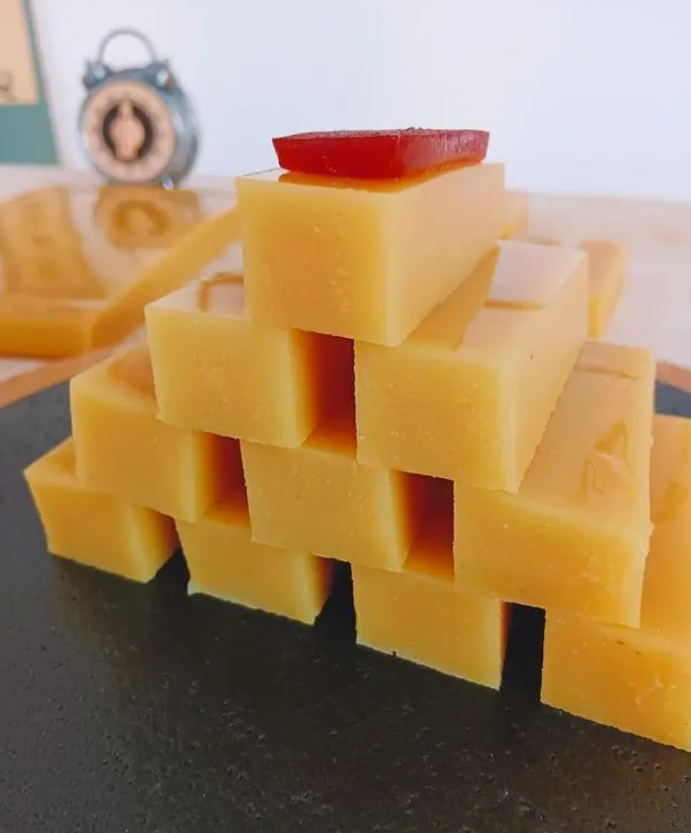
Wandouhuang
Introduction
Wandouhuang, also known as pea flour cake, is a traditional Beijing snack that has been enjoyed for generations. This sweet treat, made predominantly from yellow peas, is recognized for its smooth texture and subtle flavor. It is a staple in Beijing's culinary scene and is often savored as a dessert or a light snack. Wandouhuang is typically served in small, square-shaped pieces and is known for its pale yellow color, which is pleasing to the eye. This delicacy is particularly popular during festivals and special occasions, where it is appreciated not only for its taste but also as a representation of Beijing's rich cultural heritage.
History
The history of Wandouhuang dates back several centuries, with its origins rooted in Beijing's local cuisine. It is believed to have been a part of the imperial court's menu during the Qing Dynasty (1644-1911), where it was favored for its delicate flavor and elegant presentation. Over the years, Wandouhuang transitioned from the opulent halls of the emperors to the streets of Beijing, becoming a beloved snack among the city's residents. Its enduring popularity is a testament to its delicious taste and the nostalgia it evokes among locals, reminding them of Beijing's historical and cultural identity.
Ingredients and Preparation
Main Ingredients
The primary ingredient in Wandouhuang is yellow peas, which are ground into a fine flour. This is combined with sugar to create the cake's sweet taste. Other optional ingredients may include sesame paste or glutinous rice flour, which can be used to enhance the texture and flavor. The simplicity of the ingredients allows the natural sweetness of the peas to shine through, making Wandouhuang a delightful treat.
Preparation Method
To prepare Wandouhuang, yellow peas are first soaked and then ground into a smooth paste. This paste is combined with sugar and optionally, other flavor enhancers like sesame paste. The mixture is then steamed until it achieves a firm yet tender consistency. Once cooked, the Wandouhuang is allowed to cool before being cut into small, square-shaped pieces. The careful preparation process is crucial to achieving the cake's characteristic smooth texture and delicate flavor. Ensuring the right balance of ingredients and cooking time is essential in producing an authentic Wandouhuang.
Cultural Significance
Wandouhuang is more than just a snack; it holds cultural significance in Beijing. It is a symbol of tradition and is often associated with celebrations and gatherings. The cake's presence in various festivities underscores its role in bringing people together and celebrating local culinary art. Wandouhuang also serves as a reminder of Beijing's rich history and the evolution of its food culture over the years. By preserving traditional recipes like Wandouhuang, Beijing continues to honor its culinary legacy while sharing its unique flavors with the world.
Serving Suggestions
Wandouhuang is typically served as a dessert or snack, often accompanied by tea. Its mild sweetness pairs well with the earthy flavors of traditional Chinese teas, creating a harmonious balance. It can be enjoyed both warm and at room temperature, making it a versatile treat suitable for any occasion. For an elevated experience, Wandouhuang may be garnished with a sprinkle of sesame seeds or a drizzle of honey, enhancing its visual appeal and taste. Its simplicity and elegance make Wandouhuang a favored choice for both casual and formal dining settings.
Popularity and Influence
Wandouhuang's popularity extends beyond Beijing, as it has gained recognition in other parts of China and even internationally. Its association with Beijing's culinary heritage has made it a sought-after dish among tourists seeking an authentic taste of the city. Wandouhuang's influence is evident in the growing number of restaurants and bakeries that offer this traditional snack as part of their menu. This increased visibility has helped preserve Wandouhuang's legacy, ensuring that future generations can continue to enjoy this iconic Beijing delicacy.








