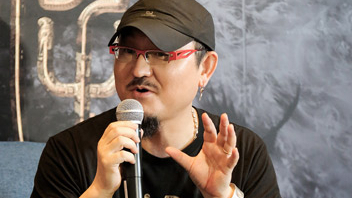
Wuershan
Introduction
Wuershan, an acclaimed ethnic Mongolian director from China, is renowned for his distinctive style in the fantasy film genre. He has earned a reputation as one of China's leading fantasy film directors, exemplified through his blockbuster hits such as Painted Skin: The Resurrection and Mojin: The Lost Legend. His latest ambitious project is the Fengshen Trilogy, a cinematic adaptation of the 16th-century novel Fengshen Yanyi (Creation of the Gods). The trilogy is a monumental undertaking both in terms of budget and scope, aiming to bring to life a mythical epic that intertwines Chinese history, folklore, and mythology. Wuershan’s work is characterized by his skillful integration of cultural legacies into mainstream cinema, aiming to present Chinese stories to global audiences in a grand, cinematic fashion.
Early Life and Education
Born in the Inner Mongolia autonomous region, Wuershan's early life was steeped in the rich cultural heritage of his ethnic background. Fascinated by mythology and the arts, his passion for storytelling and the cinematic medium began during his formative years. Details about his formal education remain sparse in available records, but it is evident that his background influenced his unique artistic vision. His fascination with narratives of mythological proportions likely fueled his passion for adapting epic tales from literature into film. This appreciation for storytelling from a young age set the foundation for his later work as a director known for crafting visually captivating and thematically rich films.
Career
Early Career
Wuershan began his career in the film industry with his directorial debut, Soap Opera, in 2004. This film was well-received in international circuits, garnering awards at festivals in South Korea and Switzerland, and it set the stage for his subsequent success. Wuershan quickly became known for his bold style and keen visual storytelling, which distinguished him in the industry. His second feature, The Butcher, the Chef and the Swordsman, further solidified his reputation, earning him the Best New Director award at Taiwan's Golden Horse festival in 2011. These early achievements highlighted Wuershan's potential as a filmmaker, paving the way for his later blockbuster successes.
Notable Works
Wuershan's rise to prominence in the Chinese film industry was marked by several high-profile projects that showcased his narrative flair and technical prowess. Painted Skin: The Resurrection (2012) was a landmark film that broke domestic box-office records, cementing his reputation as a successful commercial director. The film's success demonstrated Wuershan's ability to blend fantasy elements with mainstream appeal. Following this, Mojin: The Lost Legend (2015) continued this trend, employing special effects to weave a tomb-raiding tale that captivated audiences. Wuershan’s work on these films earned him the moniker of the "new hope of Chinese blockbusters," highlighting his impact on the genre and his ability to resonate with wide audiences.
Filmography
Wuershan's filmography is distinguished by its focus on fantasy and mythological themes. His films often explore the supernatural and the epic, drawing heavily from Chinese literary and cultural traditions. Notable entries in his filmography include:
-
Soap Opera (2004)
-
The Butcher, the Chef and the Swordsman (2010)
-
Painted Skin: The Resurrection (2012)
-
Mojin: The Lost Legend (2015)
-
Creation of the Gods I: Kingdom of Storms (2023)
Each of these films reflects Wuershan’s distinctive directorial style, characterized by visually rich storytelling and an emphasis on grand, thematic narratives. His projects often incorporate advanced special effects to bring fantastical elements to life, making him one of the leading figures in the contemporary Chinese film landscape.
Artistic Style and Influence
Wuershan’s artistic style is heavily influenced by his cultural heritage and a deep appreciation for Chinese history and mythology. His films often merge traditional themes with modern cinematic techniques, creating visually stunning and narratively complex works. Wuershan's approach to filmmaking is marked by a dedication to authenticity and an ambition to introduce Chinese mythical stories to a global audience. His use of special effects is not merely for spectacle, but to enhance storytelling, making the mythic and the fantastical accessible and engaging for viewers. By drawing inspiration from ancient texts, artifacts, and dynastic history, Wuershan crafts films that not only entertain but also educate audiences about the rich tapestry of Chinese culture.
Awards and Recognition
Throughout his career, Wuershan has received numerous accolades that recognize his contribution to the film industry. His early work earned him international awards, while his more recent films have garnered both critical and commercial success within China and abroad. Wuershan’s achievements in cinema are a testament to his vision and dedication to the craft of filmmaking. His ability to transform epic narratives into visually captivating films has not only earned him respect within the industry but has also helped elevate the profile of Chinese cinema on the world stage.








