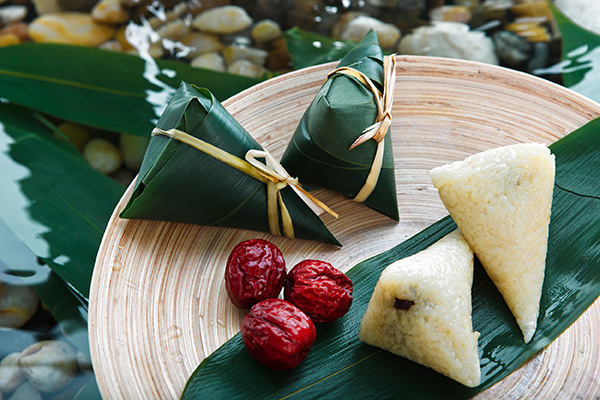
Zongzi
Introduction
Zongzi, a traditional Chinese delicacy, is a pyramid-shaped dumpling made of glutinous rice wrapped in bamboo or reed leaves. It is an integral part of Chinese culinary culture, especially celebrated during the Dragon Boat Festival, also known as Duanwu Festival. This dish offers both sweet and savory flavors, catering to diverse palates. While its preparation has transitioned from handmade techniques in small workshops to industrialized production, the essence of zongzi remains cherished by Chinese people worldwide.
History
The origins of zongzi date back to ancient China, with its consumption traditionally linked to the Dragon Boat Festival. The dish is said to commemorate the patriotic poet Qu Yuan from the Warring States Period (475-221 BC). Legend has it that after Qu Yuan drowned himself in a river, locals threw zongzi into the water to prevent fish from consuming his body. Although the tale of Qu Yuan has become more remote over generations, zongzi continues to be a celebrated element of the festival, reflecting the enduring cultural significance of this traditional dumpling.
Cultural Significance
Zongzi holds profound cultural significance, particularly during the Dragon Boat Festival, which occurs on the fifth day of the fifth month on the traditional Chinese calendar. The festival is widely celebrated in memory of Qu Yuan, whose story of patriotism and sacrifice has become an integral part of Chinese folklore. Eating zongzi during this time is not just a culinary tradition but also a symbolic act of remembrance and respect. Beyond its historical association, zongzi is emblematic of Chinese unity, as families and communities gather to prepare and enjoy these delicacies together. The festival customs, including dragon boat races and the preparation of zongzi, highlight themes of harmony and togetherness, resonating with the broader cultural ethos of connecting people through shared heritage.
Types and Varieties
Zongzi is a versatile dish with numerous types and varieties that cater to regional preferences and tastes.
Regional Variations
The preparation and filling of Zongzi vary significantly across different regions in China. For instance, in Guangdong province, large zongzi filled with savory glutinous rice and mung beans are a popular breakfast choice. These saltwater dumplings, known as xianshuizongzi, often contain a piece of lard for added flavor and moisture. In contrast, the northern part of China favors sweet zongzi, filled with red bean paste or Chinese jujubes. The differences in ingredients and flavors reflect the diverse culinary traditions inherent in Chinese culture.
Sweet and Savory Fillings
Zongzi fillings can be broadly categorized into sweet and savory. Savory zongzi typically feature ingredients like pork belly, salted duck egg yolks, dried Chinese mushrooms, and chestnuts. These dumplings are often seasoned with soy sauce and five-spice powder for a rich flavor. On the other hand, sweet zongzi may contain fillings such as red bean paste, candied osmanthus flowers, or sweet chestnuts. The glutinous rice used in sweet zongzi may also be mixed with millet or red beans to enhance the texture and taste. The choice between sweet and savory zongzi allows for a wide range of flavor experiences, appealing to various preferences.
Preparation and Cooking
The process begins with soaking the glutinous rice and mung beans, followed by marinating the meat and preparing other fillings. The leaves are washed and softened to facilitate wrapping. Each zongzi is crafted by folding the leaves into a cone, filling them with rice and chosen fillings, and then securing them with string or reed. The wrapped zongzi are boiled until they are cooked thoroughly. While modern technology has introduced automated processes, the traditional hand-wrapping technique remains a cherished aspect of zongzi making.








