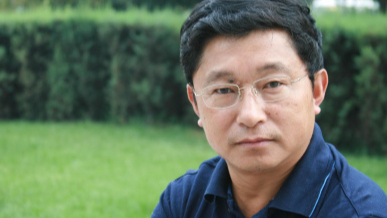
Alai
Introduction
Alai, born in 1959 in Sichuan province, is a renowned Jiarong Tibetan writer with a profound impact on contemporary Chinese literature. His works are celebrated for their unique narrative style and deep cultural connotations, often set against the backdrop of Tibetan culture, history, and human nature. Alai's storytelling captures the essence of Tibetan life and culture, providing readers with a rich and diverse perspective on the region.
Education
Alai began his education in 1965 and by 1973, he had returned to his hometown to work in agriculture after graduating from junior high school. He later enrolled in the Maerkang Normal School, where he pursued a secondary teacher's education. After completing his studies, Alai worked as a teacher for nearly five years at the county level, teaching both junior and senior high school students.
Career
Alai's career took a literary turn in the 1980s when he shifted from poetry to novels and joined the literary magazine Caodi as an editor, affiliated with the Cultural Bureau of the Aba Tibet and Qiang autonomous prefecture. His breakthrough came with the completion of his novel Red Poppies in 1994, which was published in 1998 and won him the prestigious Mao Dun Literature Prize in 2000, making him one of the first ethnic Tibetan writers to receive this honor. Alai has since published numerous works, including Red Poppies, which was shortlisted for the 2002 Kiriyama Prize, and a trilogy of novels collectively titled Hollow Mountain.
Cultural Influence
Alai's cultural influence is significant, as his writings offer insights into Tibetan culture and life, enriching the tapestry of Chinese literature. His narratives challenge and expand contemporary theoretical paradigms of literature through the postcolonial lens of Tibetan culture. Alai's work is regarded as a significant contribution to the broader understanding of ethnic minority literature within the Chinese literary landscape. Photo Gallery(1 picture)CategoriesLiteratureTagModern and Contemporary LiteratureLiterary FiguresRelatedHistoric Ensemble of the Potala Palace, LhasaYan DehuiWutai MountainTsongkhapaCatalogue1. Introduction2. Education3. Career4. Cultural Influence- - - []








