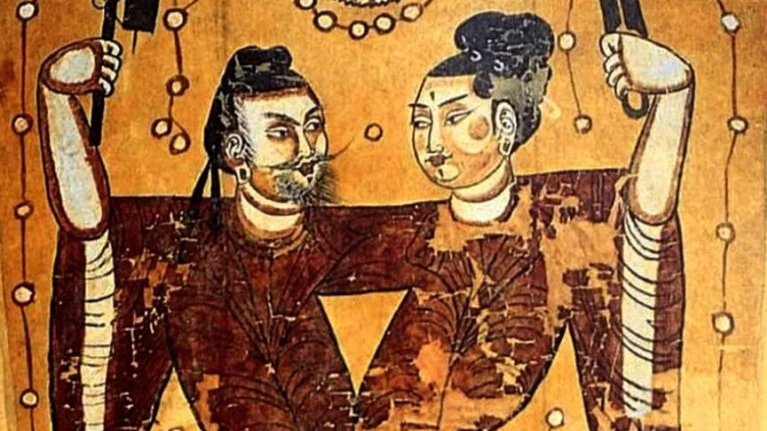
Fuxi
Introduction
Fuxi, also known as Tai Hao, is a legendary figure in Chinese mythology who is often regarded as one of the Three Sovereigns and a cultural hero of ancient China. His story and contributions are deeply woven into the fabric of China's ancient cultural heritage. According to mythological accounts, Fuxi was born miraculously in the 29th century BC in Tianshui, a region that is today part of Gansu province. He is depicted as a divine being with a serpent's body, symbolizing his supernatural origins. Fuxi is credited with several monumental achievements that laid the foundation for Chinese civilization.
Contributions and Inventions
Fuxi is venerated for creating humanity and bringing about significant advancements that contributed to the development of Chinese culture and society. He is credited with inventing the practices of hunting, fishing, and cooking, which were essential for the survival and sustenance of early human communities. Additionally, Fuxi is said to have invented Chinese characters, a monumental contribution that facilitated communication and record-keeping, thus fostering the growth of civilization.
Fuxi's influence extended into societal structures as well; he is believed to have instituted the practice of marriage, formalizing the bonds between individuals and establishing family units as the cornerstone of social organization. Moreover, he is known for offering the first open-air sacrifice to heaven, a ritual that underscored the spiritual and religious dimensions of ancient Chinese culture.
Tianshui and the Tianshui Museum
Tianshui, believed to be the birthplace of Fuxi, holds a special place in Chinese mythology and cultural history. The Tianshui Museum, founded in 1979 and located in the Fuxi Shrine in the city, is dedicated to preserving and promoting the rich cultural heritage associated with Fuxi. Covering an area of 30,060 square meters, the museum features nine exhibition halls and a high-definition digital cinema. It showcases a wide array of artifacts, including stone and bone tools, pottery, jade, ceramics, bronzeware from the Shang and Zhou dynasties, and painted pottery from the Neolithic Era, which highlight the region's historical significance.
The museum's exhibits provide a comprehensive overview of the cultural and historical context in which Fuxi's legend emerged, offering visitors a glimpse into the ancient world and its traditions. The Tianshui Museum plays a vital role in the preservation and dissemination of knowledge about Fuxi and the early history of China.
Legacy and Cultural Impact
Fuxi's legacy transcends his mythological origins, embodying the foundational aspects of ancient Chinese society and culture. His story and contributions are celebrated in various forms of Chinese art, literature, and folklore, reflecting his enduring influence on Chinese cultural identity. Fuxi is often depicted alongside Nyuwa, another prominent figure in Chinese mythology, who is sometimes portrayed as his sister or wife, and together they are credited with creating humanity and shaping the natural world.
The reverence for Fuxi is also evident in the numerous temples and shrines dedicated to him throughout China, where he is honored as a cultural hero and a symbol of innovation and leadership. His mythological narrative continues to inspire and educate, offering a lens through which to explore the rich tapestry of Chinese cultural history.
In summary, Fuxi is a central figure in Chinese mythology whose contributions to humanity, societal development, and cultural practices have left an indelible mark on Chinese history. His legacy is preserved and celebrated in cultural institutions like the Tianshui Museum, ensuring that future generations can appreciate his role in shaping the early foundations of Chinese civilization.








