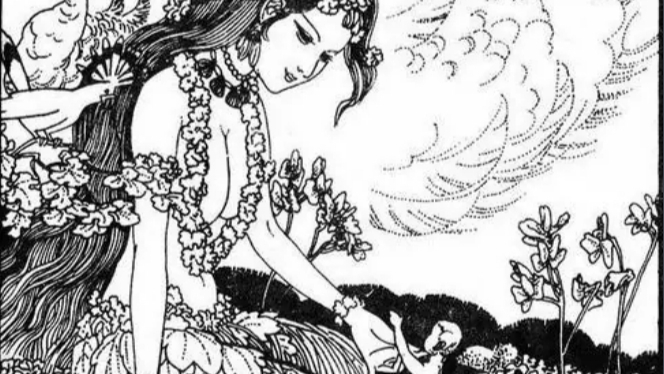
Nyuwa
Introduction
Nyuwa, also spelled as Nüwa, is a prominent figure in Chinese mythology, revered as the mother goddess and creator of humanity. She is a central character in ancient Chinese folklore and is often depicted as a compassionate and powerful deity who played a pivotal role in shaping the world and saving it from catastrophic events. Her legacy is deeply embedded in Chinese culture, literature, art, and religious practices, making her one of the most enduring symbols of Chinese mythology.
Nyuwa is commonly portrayed as a half-human, half-serpent figure, symbolizing her connection to both the divine and the natural world. Her mythological narratives emphasize themes of creation, sacrifice, and the nurturing of life, reflecting the values and beliefs of ancient Chinese civilization.
Mythological Background
Nyuwa's origins and mythological significance are rooted in ancient Chinese cosmology and folklore. Nyuwa is often depicted alongside Fuxi, another legendary figure in Chinese mythology. Together, they are considered the ancestors of the Chinese people. In some accounts, they are portrayed as siblings and in others as husband and wife. According to legend, Nyuwa and Fuxi were born in a time of chaos and played crucial roles in establishing order and civilization. They are frequently depicted as intertwined figures with human heads and serpent-like bodies, symbolizing unity and the balance between heaven and earth.
Archaeological discoveries, such as wall paintings of Nyuwa found on Renzu Mountain, provide evidence of her enduring cultural importance. These depictions, along with ancient texts and oral traditions, have preserved her stories and cemented her status as a central figure in Chinese mythology.
Role in Chinese Mythology
Creation of Humanity
The myth of Nyuwa creating humanity is one of the most celebrated narratives in Chinese mythology. According to legend, Nyuwa lived in a world devoid of human beings and felt a deep sense of loneliness. To alleviate this solitude, she decided to create life. Using yellow clay, she meticulously molded figures in her own image, breathing life into them to create the first humans. These clay figures became the ancestors of humanity, and through this act, Nyuwa established her role as the mother of all humans.
In some versions of the myth, Nyuwa used a rope to fling drops of mud onto the ground, and each drop transformed into a human being. This variation of the story explains the diversity of human appearances and social statuses, as the figures created by hand were considered noble, while those formed from the splattered mud were deemed commoners. This tale reflects ancient Chinese perspectives on social hierarchy and the interconnectedness of all people.
The creation myth of Nyuwa emphasizes her nurturing and maternal qualities, portraying her as a deity who values life and seeks to bring harmony to the world. Her act of creating humanity is celebrated in various cultural and religious practices, and her image as a creator goddess continues to inspire artistic and literary works.
Repairing the Sky
Another iconic myth associated with Nyuwa is her heroic act of repairing the sky. According to the legend, a catastrophic battle among deities caused the heavens to crack, resulting in chaos and destruction on earth. Rivers overflowed, fires raged, and the land was plagued by disasters. Witnessing the suffering of the world, Nyuwa took it upon herself to restore order.
She gathered five-colored stones and melted them to create a magical substance capable of patching the holes in the sky. When the stones ran out, Nyuwa sacrificed herself by using her own body to complete the repair. Her selfless act saved the world from further calamity and restored balance to the cosmos.
The story of Nyuwa repairing the sky is a powerful allegory for resilience, sacrifice, and the importance of harmony between humanity and nature. The myth also serves as a reminder of the enduring spirit of compassion and determination that Nyuwa embodies.
Representation in Literature and Art
Nyuwa's influence extends beyond mythology into the realms of literature and art, where she is celebrated as a symbol of creation, restoration, and maternal care. Her image as a half-human, half-serpent figure is a recurring motif in paintings, often depicted alongside Fuxi. In these representations, Nyuwa is shown holding a compass, symbolizing her connection to the heavens, while Fuxi holds a square, representing the earth. Their intertwined serpent tails signify unity and the cyclical nature of life.
One notable example of Nyuwa's depiction in art is a painting unearthed from the Astana Tombs in Turpan, Xinjiang. This artwork portrays Nyuwa and Fuxi surrounded by celestial elements such as the sun, moon, and stars, highlighting their divine status and their role as creators. The painting also reflects the spread of Han culture and its influence on other regions during ancient times.
In literature, Nyuwa's stories have been preserved and adapted in various forms, from classical texts like the "Shanhaijing" (Classic of Mountains and Seas) to modern theatrical productions. For instance, the National Ballet of China incorporated the tale of "Nyuwa Repairs the Sky" into a ballet production, showcasing her story through the medium of dance. This adaptation highlights the timeless appeal of Nyuwa's myths and their relevance to contemporary audiences.
Temples dedicated to Nyuwa, such as the Palace of Nvwa in Handan and the Nyuwa Temple on Renzu Mountain, serve as cultural and religious landmarks. These sites feature intricate architectural designs, statues of Nyuwa, and ceremonial spaces where rituals are performed to honor her legacy. Annual festivals and ceremonies held at these temples attract visitors and devotees, ensuring that Nyuwa's stories continue to be celebrated and passed down through generations.








