Gunpowder
Introduction
Gunpowder, a groundbreaking explosive material that revolutionized warfare and various other industries, is a chemical compound known for its ability to burn rapidly to produce a large amount of gas and heat. Originally developed in ancient China, gunpowder consists of a mixture of sulfur, charcoal, and potassium nitrate (saltpeter). This volatile combination marks one of the greatest innovations in chemistry, leading to profound changes in military strategies, technology, and even culture. Used primarily as a propellant in firearms and artillery, gunpowder has also found applications in mining, construction, and various pyrotechnic displays. Its impact extends beyond the military into art and culture, influencing fields such as literature, painting, and entertainment.
History
Origins
The origins of gunpowder trace back to ancient China, with its first recorded use appearing during the Tang Dynasty (618-907). It is believed that Taoist alchemists accidentally discovered gunpowder around the 9th century as they sought an elixir for immortality. This serendipitous invention initially took the form of a black powder used in fireworks and eventually evolved into a significant military asset. Initially, gunpowder was employed in rudimentary weapons and pyrotechnic displays for entertainment and religious ceremonies. The Song Dynasty (960-1279) later documented its use in warfare, where it became a critical factor in the development of early firearms and explosives.
Spread and Development
Following its invention in China, the knowledge of gunpowder gradually spread to other parts of the world. Through trade routes and military confrontations, it reached the Middle East and then Europe by the 13th century. In Europe, gunpowder technology underwent rapid development, leading to innovations in weaponry and military tactics. The Hundred Years' War between England and France showcased some of the earliest uses of gunpowder artillery in Europe. Over time, the composition and manufacturing processes evolved, resulting in more efficient and powerful explosives. This technological progression played a pivotal role in the military, leading to the eventual decline of traditional fortress-based defense strategies.
Uses
Military Applications
Gunpowder's primary application has been in the military, where it has been used as a propellant in firearms, artillery, and other munitions. Its introduction marked a turning point in warfare, enabling the development of powerful weapons that could breach fortifications and inflict significant damage from a distance. Initially used in primitive hand cannons and bombards, gunpowder technology evolved into more sophisticated firearms, such as muskets and cannons, which became standard military equipment. The rapid expansion of gunpowder weaponry played a crucial role in European colonialism, as well as in major conflicts such as the Napoleonic Wars and the American Civil War.
Civilian Uses
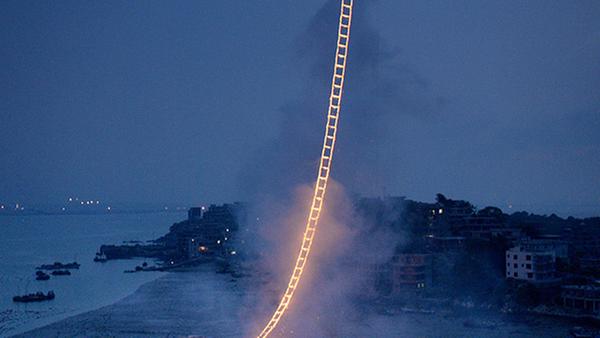
Beyond its military applications, gunpowder has been employed in various civilian industries. In mining and construction, it has been used to blast through rock and earth, enabling the excavation of tunnels and the construction of infrastructure like railways and canals. Additionally, gunpowder has been central to the development of fireworks and other pyrotechnic displays, captivating audiences with their vibrant colors and spectacular designs. In art, contemporary artists like Cai Guo-Qiang have innovatively utilized gunpowder as a medium, creating dynamic and unpredictable works that combine elements of destruction and creation.
Impact on Warfare
Technological Advancements
The development and refinement of gunpowder technology have driven significant technological advancements in warfare. Its introduction led to the creation of more powerful and accurate firearms, fundamentally altering the landscape of battle. Innovations such as rifling, which improved the accuracy of firearms, and the development of breech-loading and repeating weapons, increased the rate of fire and efficiency of military operations. Gunpowder also paved the way for advancements in artillery design, with the development of mortars, howitzers, and ultimately, modern artillery systems that dominate contemporary battlefields.
Changes in Military Strategy
Gunpowder's impact on military strategy is profound, as it rendered traditional defensive structures such as castles and fortresses vulnerable to artillery bombardment. This shift necessitated new forms of fortification, such as star forts, which could better withstand artillery fire. Additionally, the increased range and lethality of gunpowder weapons forced military strategists to develop new tactics that emphasized mobility, firepower, and coordination. The concept of combined arms, where infantry, cavalry, and artillery work together on the battlefield, emerged during this period, laying the foundation for modern military doctrine.
Cultural Significance
Influence in Literature and Art
Gunpowder's transformative effect on society and warfare has made it a subject of fascination in literature and art. It has been depicted in countless works, from historical novels to paintings, often symbolizing both the destructive and creative forces inherent in its use. Artists like Cai Guo-Qiang have harnessed gunpowder's explosive potential to create dramatic visual art pieces that explore themes of chaos, energy, and transformation. In literature, gunpowder frequently appears as a symbol of technological progress or as a powerful tool that shapes the destiny of nations and individuals.
Symbolism and Traditions
Gunpowder holds significant symbolic value across various cultures and traditions. In China, for example, it is closely associated with celebrations and festivals, where fireworks are used to ward off evil spirits and bring good fortune. The explosive nature of gunpowder has also been used metaphorically to represent sudden, transformative change or the unleashing of latent potential. In European history, the "Gunpowder Plot" of 1605, an attempt to assassinate King James I, has become emblematic of political rebellion and is remembered annually in the UK with Bonfire Night celebrations.








