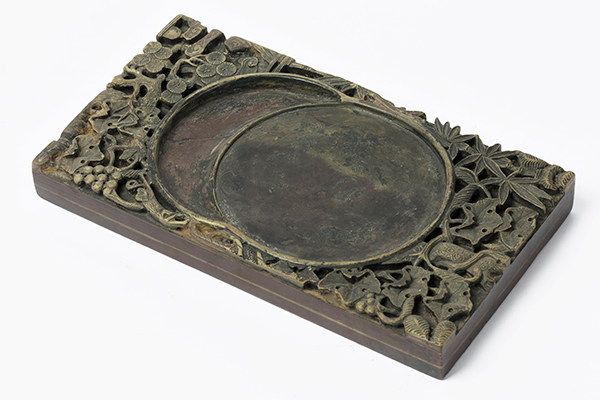
Inkstone
Introduction
An inkstone is a meticulously crafted stone mortar used primarily for the grinding and containment of ink. It holds a significant place in the artistic and literary traditions of China, being one of the Four Treasures of the Study integral to a Chinese scholar's toolkit, alongside the brush, ink, and rice paper. The inkstone's role is pivotal in determining the quality and texture of the ink used by calligraphers and painters. It is not merely a functional tool but is also considered an embodiment of cultural heritage, representing the confluence of practical utility and aesthetic excellence. This tool has been treasured by scholars and artists throughout Chinese history for its ability to enhance the artistic process through its unique characteristics, such as its texture and grinding properties.
History
The history of inkstones dates back to ancient China, with their use spanning from prehistoric times through the Qing Dynasty (1644-1911). Inkstones have evolved over the centuries in terms of design, material, and craftsmanship, reflecting the artistic and cultural shifts within Chinese society. This extensive history illustrates the enduring cultural importance of inkstones, which have been utilized and revered across different Chinese dynasties.
Notable inkstones include the Chengni inkstone, one of the "four famous inkstones" in China, renowned for its fine texture and minimal harm to brushes. The craft of making Chengni inkstones, once lost, was revived by Lin Yongmao and his descendants in Xinjiang county, Shanxi province. This craft, which involves over ten intricate steps and takes more than a year to complete, was recognized in 2008 as one of China's national intangible cultural heritages. The Duan inkstone, another famous type, is particularly noted for its historical and artistic value. These inkstones are not just tools but are also considered symbols of the rich artistic heritage of China.
Types and Characteristics
Inkstones come in various types, each with distinct characteristics influenced by the materials used and the regions they originate from. The "four famous inkstones" of China are the Duan inkstone from Guangdong, the She inkstone from Anhui, the Tao inkslab from Gansu, and the Chengni inkstone from Shanxi. Each type of inkstone is appreciated for its unique attributes; for instance, Duan inkstones are valued for their smooth texture, while She inkstones are known for their hardness and fine grain. Tao inkstones, with their viridity and sturdiness, are celebrated for their high ink-generation efficiency and long-lasting ink retention.
Chengni inkstones are particularly famous for their soft texture, which minimizes wear on brushes, and their ability to produce a fine ink paste. Additionally, Songhua stones, found in the Changbai Mountain area in Jilin province, are recognized for their rich colors and fine textures, contributing to the diversity of inkstone styles available to collectors and artists alike.
Cultural and Artistic Value
Inkstones hold immense cultural and artistic value, serving as a bridge between the past and present by preserving traditional craftsmanship and artistic expression. They are not only functional implements but also objects of art that reflect the aesthetic preferences and artistic techniques of their time. Inkstones are often intricately carved with designs and inscriptions that enhance their beauty and cultural significance. These carvings frequently depict scenes from nature or historical narratives, adding layers of meaning and value to the inkstones. The artistry involved in creating inkstones is a testament to the skills and dedication of craftsmen who strive to preserve these cultural treasures for future generations.
Modern Use and Preservation
In modern times, inkstones continue to be valued by artists, scholars, and collectors for their historical and artistic significance. Efforts to preserve and promote the craft of inkstone making are ongoing, with initiatives such as collaborating with universities and utilizing digital platforms to reach broader audiences. Preservation efforts also focus on maintaining the traditional techniques and knowledge associated with inkstone crafting, ensuring that these skills are passed down to future generations. As part of these efforts, inkstones are often featured in museums and cultural exhibitions, where they are appreciated not only as tools but also as works of art that embody the rich cultural heritage of China. The continued interest in inkstones highlights their enduring appeal and the importance of preserving this integral aspect of Chinese artistic and cultural history.








