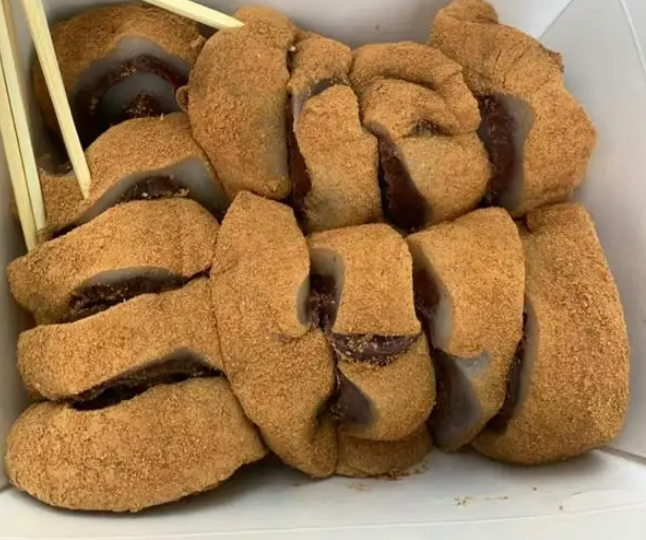
Lyudagun'er
Introduction
Lyudagun'er is a traditional Chinese snack originating from Beijing. This sweet delicacy is characterized by its unique texture and flavor, which combines glutinous rice flour with a filling made from red bean paste or sweetened soybean powder. The name "Lyudagun'er" translates to "donkey rolling on the ground," reflecting the appearance of the snack, which is coated with a layer of soy flour that resembles a donkey rolling in the sand. This popular treat is often enjoyed as a dessert or a snack during festivals and special occasions.
History
The history of Lyudagun'er dates back to the Qing Dynasty (1644-1911), when it was a popular street food in Beijing. The snack's origins are linked to local folklore, which tells the story of a donkey rolling on the ground, resulting in a coating of yellow sand. This imagery inspired the creation of a snack that mimicked the donkey's appearance. Lyudagun'er became a favorite among the citizens of Beijing due to its sweet taste and soft texture. Over the years, the snack has remained a staple in northern Chinese cuisine, particularly during traditional festivals and celebrations.
Ingredients
The primary ingredients used to make Lyudagun'er include glutinous rice flour, red bean paste or sweetened soybean powder, and roasted soybean flour for coating. The glutinous rice flour serves as the base for the dough, providing a sticky and chewy texture. The filling typically consists of sweetened red bean paste, although variations using sweetened soybean powder or sesame paste are also common. The roasted soybean flour coating gives Lyudagun'er its distinctive appearance and adds a subtle nutty flavor to the snack.
Preparation
The preparation of Lyudagun'er involves several key steps. First, the glutinous rice flour is mixed with water to form a smooth dough. The dough is then rolled out into a thin sheet and cut into small squares. A spoonful of red bean paste or sweetened soybean powder is placed in the center of each square before the dough is folded over the filling to form a small pouch. The pouches are then steamed until cooked through, resulting in a soft and chewy texture. Once steamed, the Lyudagun'er is rolled in roasted soybean flour, which gives the snack its characteristic "donkey roll" appearance.
Cultural Significance
Lyudagun'er holds cultural significance in northern Chinese cuisine and is often associated with traditional festivals and celebrations. The snack is commonly enjoyed during the Spring Festival (Chinese New Year) and other festive occasions, symbolizing good fortune and prosperity. Its unique name and appearance also contribute to its popularity, as it evokes imagery of traditional folklore. Lyudagun'er is not only a delightful treat but also a representation of Beijing's culinary heritage, reflecting the creativity and resourcefulness of its people.








