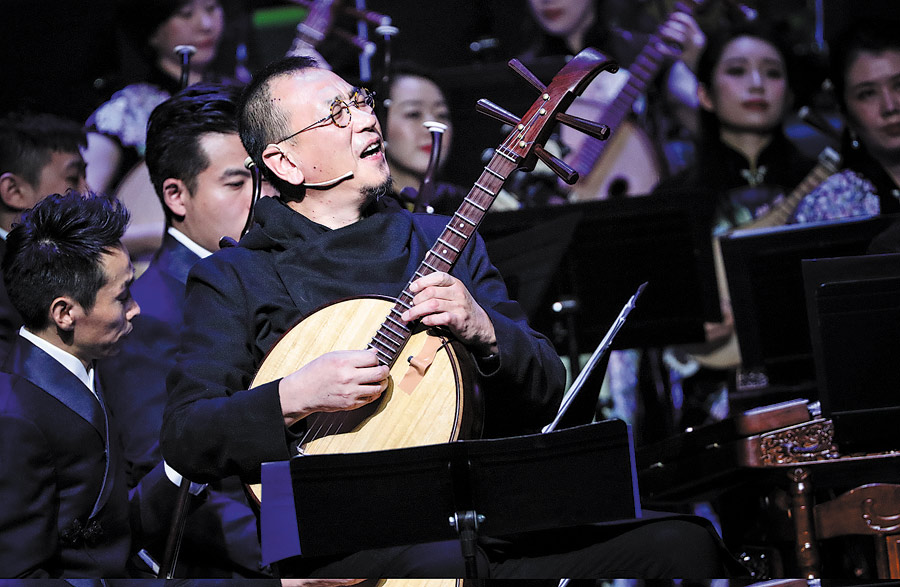
Zhongruan
Overview
The zhongruan is a traditional Chinese plucked-string instrument belonging to the ruan family. With a history spanning over 2,000 years, it is characterized by its circular body, long neck, and four strings. The zhongruan is widely used in Chinese orchestras and ensembles and is celebrated for its versatility, capable of producing a wide range of tones suitable for both traditional and contemporary music genres. Its name, "zhongruan" translates to "medium ruan", distinguishing it from other members of the ruan family, such as the smaller xiaoruan and larger daruan.
Historical Background
The ruan family of instruments dates back to ancient China, with its origins traced to the Han Dynasty (202 BC–220 AD). The zhongruan evolved as part of the ruan's development and was later standardized in size and design during the 20th century. Traditionally, the instrument was crafted with silk strings and valuable woods, but modern versions often use steel strings and moisture-resistant materials to enhance durability and sound quality. The zhongruan's sound box, circular in shape, contributes to its distinctive tonal qualities, which range from bright and resonant to deep and mellow.
Structure and Design
The zhongruan features a circular wooden body with a flat top and back, a long neck with frets, and four strings. The frets are carefully placed to allow for precise intonation, and the instrument is typically tuned in fifths, similar to a cello. The strings are plucked using a plectrum or fingers, allowing for a variety of playing techniques. Modern zhongruans are available in different sizes, including the bass daruan, which is frequently used in orchestral settings.
Musical Applications
The zhongruan is a versatile instrument, capable of adapting to various musical styles. It is commonly used in traditional Chinese music, including folk tunes and opera, as well as in contemporary genres such as jazz, rock, and fusion. Its ability to blend seamlessly with other instruments has made it a staple in Chinese orchestras. Notable compositions featuring the zhongruan include adaptations of folk songs, original works for Chinese ensembles, and experimental pieces that incorporate Western influences.
Prominent Players and Innovations
Feng Mantian, a renowned zhongruan player, has been instrumental in popularizing the instrument through his innovative fusion of traditional Chinese music with contemporary genres like rock and jazz. Feng's performances often highlight the zhongruan's adaptability, showcasing its ability to produce intense and original sounds. He has collaborated with other musicians to create unique compositions, such as "Xintianyou Capriccio," which combines the zhongruan with the suona and human voices.
Li Hao, another advocate for the zhongruan, has dedicated himself to crafting replicas of ancient ruans based on historical paintings and research. His work has brought renewed attention to the instrument's historical significance and aesthetic beauty. Li's handmade instruments have been featured in performances by ensembles like Zide Guqin Studio, further bridging the gap between traditional and modern interpretations of the zhongruan.
Cultural Significance
The zhongruan holds a special place in Chinese cultural heritage, often symbolizing the fusion of tradition and innovation. It has been featured in various cultural events, such as the Beijing Traditional Music Festival, which showcases traditional Chinese instruments, including the zhongruan, erhu, pipa, and bamboo flute. The instrument is also celebrated in international music festivals and performances, where it serves as a bridge between Eastern and Western musical traditions.
Modern Revival and Popularity
In recent years, the zhongruan has experienced a resurgence in popularity, driven by social media, cultural exchange programs, and the efforts of passionate musicians. Platforms like Bilibili and Douyin have introduced the instrument to younger audiences, often through creative covers of pop songs and collaborations with other traditional instruments. The rise of guofeng (national style) music has further cemented the zhongruan's role in blending ancient melodies with modern production techniques. Article reference1. Traditional music festival makes capital return. chinadaily.com.cn. 20242. Music teacher keeps village students in tune with their talent. chinadaily.com.cn. 20213. Tuning in to the past. chinadaily.com.cn. 2020Photo Gallery(7 pictures)CategoriesArtsTagChinese MusicRelatedRuanCatalogue1. Overview2. Historical Background3. Structure and Design4. Musical Applications5. Prominent Players and Innovations6. Cultural Significance7. Modern Revival and Popularity- - - []








