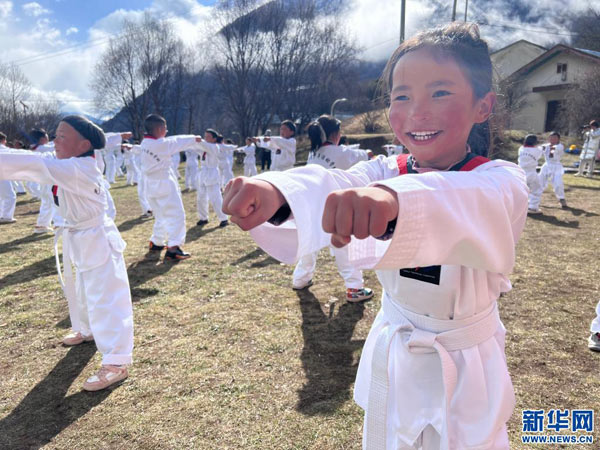
Taekwondo
Introduction
Taekwondo is a Korean martial art that emphasizes head-height kicks, jumping and spinning kicks, and fast kicking techniques. It was developed in the mid-20th century and has since grown to become one of the most popular martial arts in the world. Known for its emphasis on speed and agility, Taekwondo is practiced by millions worldwide and is also an Olympic sport.
Historical Background
The modern form of Taekwondo was created in South Korea during the 1940s and 1950s by martial artists with backgrounds in Japanese and Chinese martial arts. The name "Taekwondo" was adopted in 1955, and the martial art incorporates elements from various Korean martial arts, as well as influences from Chinese and Japanese practices.
Philosophy and Techniques
Taekwondo is not just a martial art but a way of life, emphasizing the development of the practitioner's character through strict discipline and ethical conduct. It is built on five core tenets: courtesy, integrity, perseverance, self-control, and indomitable spirit. Practitioners are encouraged to apply these principles both in practice and in their daily lives.
The techniques in Taekwondo are divided into several categories, including strikes, kicks, blocks, and open-hand techniques. One of the unique aspects of Taekwondo is its focus on high, fast kicks, which are designed to keep opponents at a distance. This involves a range of movements, including the art's signature spinning kicks and jump kicks.
Global Influence and Events
Taekwondo has gained a significant following worldwide. It was included as a demonstration sport in the 1988 Seoul Olympics and became an official Olympic sport in the 2000 Sydney Olympics. The World Taekwondo Federation (WTF) oversees the sport globally and organizes events like the World Taekwondo Championships and the Grand Prix series.
In addition to Olympic recognition, Taekwondo is practiced in countries all over the world, from small dojangs (training halls) in local communities to large international tournaments. It is taught as a form of self-defense and as a competitive sport, serving as a vehicle for cultural exchange and international friendship. Photo Gallery(1 picture)CategoriesSports and GamesTagMartial ArtsTraditional SportsCatalogue1. Introduction2. Historical Background3. Philosophy and Techniques4. Global Influence and Events- - - []








